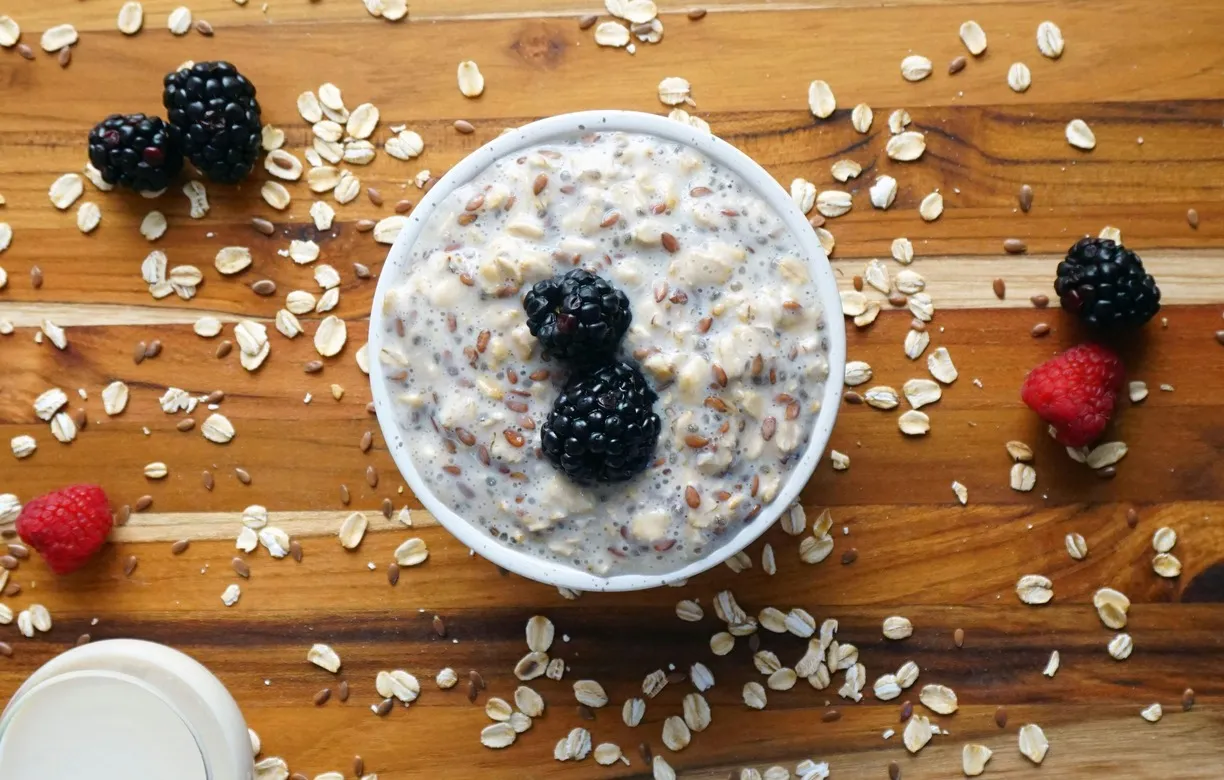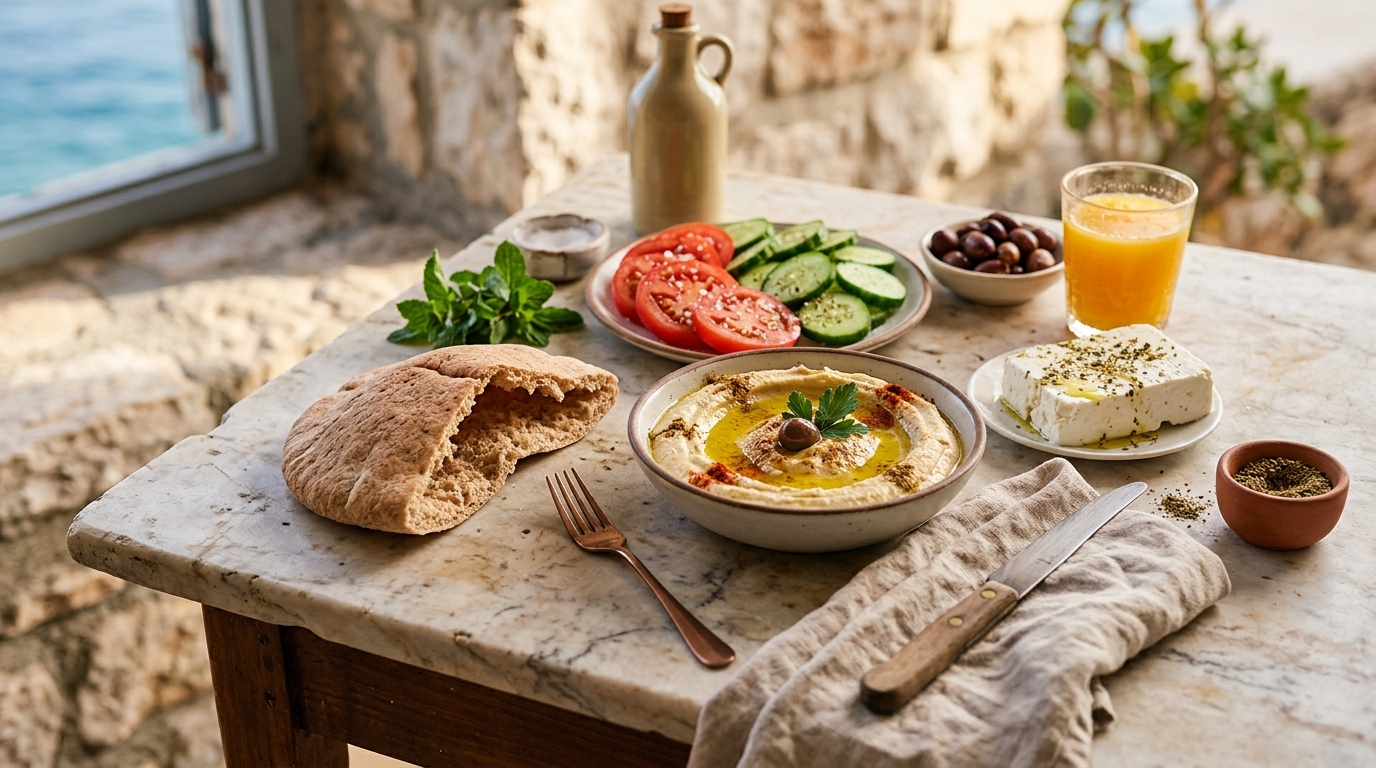
Most breakfasts do one of two things. They spike your blood sugar and leave you hungry by 10am, or they’re so boring you stop eating them by Tuesday. Mediterranean breakfasts don’t do either. They’re built around real food: olive oil, eggs, yogurt, vegetables, good bread, and they’ve been keeping people full and healthy for generations before anyone called it a diet.
Key Takeaways
– Mediterranean-style breakfasts combine protein, healthy fats, and fiber to sustain energy for hours.
– The Harvard T.H. Chan School of Public Health ranks the Mediterranean diet among the most evidence-backed eating patterns for long-term health.
– You don’t need special ingredients. Eggs, yogurt, tomatoes, olive oil, and good bread cover most of these recipes.
– Several of these take under 10 minutes to make.
Why Mediterranean Mornings Hit Differently
The difference isn’t some secret ingredient. It’s the combination. A breakfast built on protein, fat, and fiber digests slowly. You don’t get the crash. You get sustained energy, and you’re not staring at the vending machine at 11am wondering how it came to this.
Research backs this up consistently. A 2024 review in the International Journal of Molecular Sciences found that the Mediterranean diet’s impact on gut microbiome diversity translates directly into better metabolic outcomes, including more stable blood sugar levels throughout the day. That matters most in the morning, when your body is coming off a fast and highly responsive to what you eat first.
The other thing worth saying: these breakfasts taste good. That sounds obvious, but it isn’t. Too many “healthy breakfast” recipes ask you to eat something unpleasant in exchange for a marginal nutritional benefit. These don’t.
Shakshuka
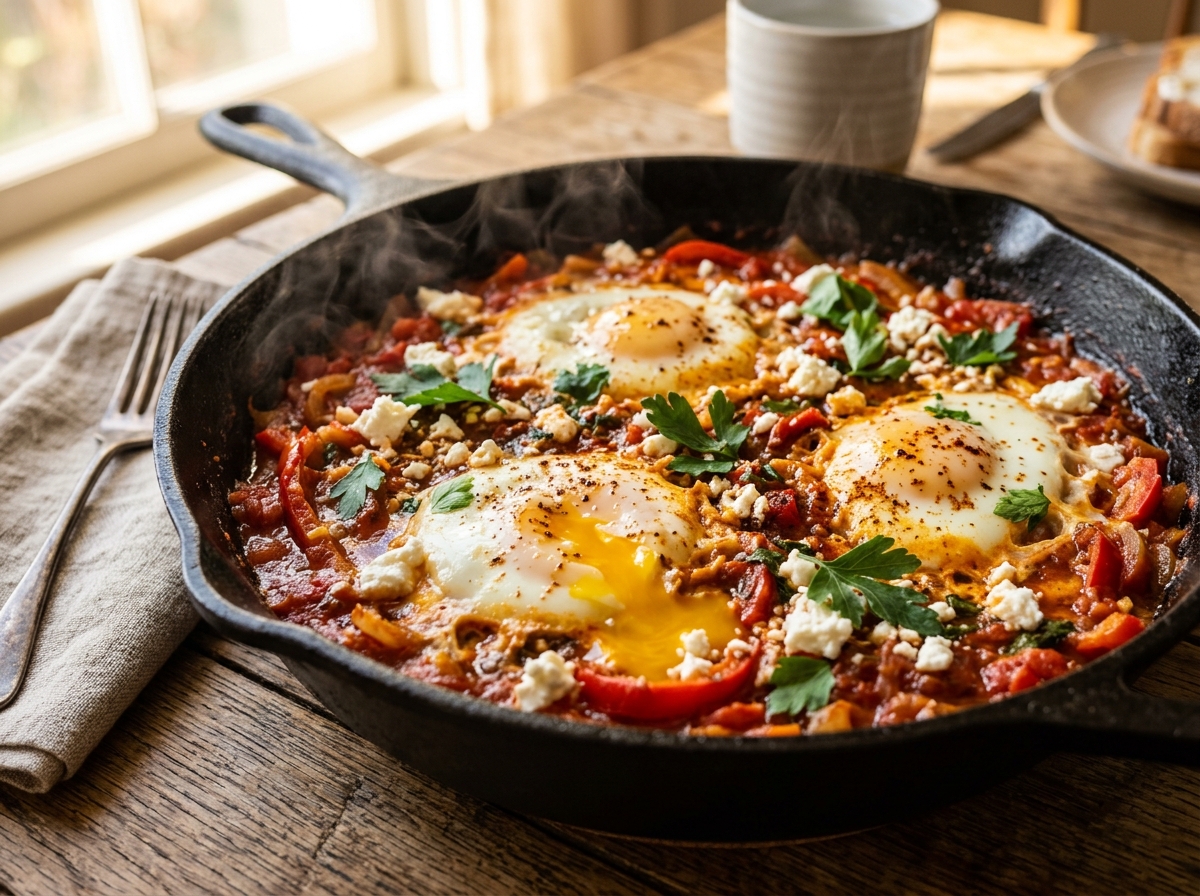
This is probably the best-known Mediterranean breakfast, and it deserves the reputation. Get the full recipe Eggs poached directly in a spiced tomato and pepper sauce, finished with a handful of crumbled feta and some fresh parsley. One pan. About 25 minutes.
The key is to let the tomato sauce reduce properly before you add the eggs. Too much liquid and you end up with poached eggs floating in soup. Cook the sauce down until it’s thick enough that a spoon dragged through it leaves a clear path. Then make wells and crack the eggs in. Cover the pan, cook for 5 to 7 minutes depending on how you like your yolks. That’s it.
A pinch of cumin and smoked paprika in the sauce makes a real difference. So does a decent glug of olive oil at the start. Don’t skip either.
Greek Yogurt Bowl with Honey, Walnuts, and Fruit
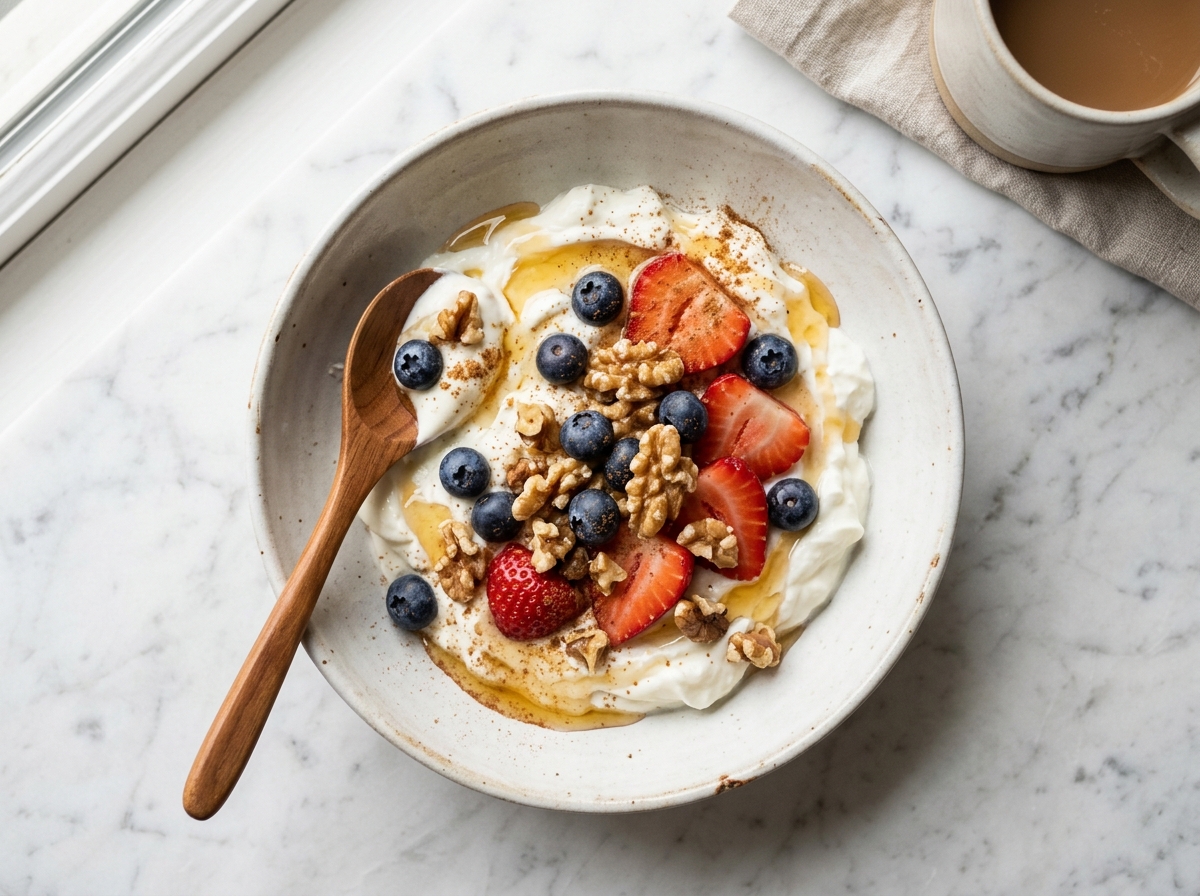
Not all yogurt bowls are created equal. Get the full recipe The version with low-fat fruit yogurt and granola is basically dessert. This one is different.
Full-fat Greek yogurt, a drizzle of good honey, a small handful of walnuts, and whatever fruit is in season. That’s the base. Figs when they’re available. Pomegranate seeds in winter. Berries in summer. The combination of protein from the yogurt, fat from the walnuts, and natural sugar from the fruit works in a way that low-fat alternatives simply don’t replicate.
Greek yogurt is also worth eating for its own sake. It’s genuinely high in protein (around 17-20g per 200g serving) and contains live cultures that support gut health. A study published in Gut Microbiota Research found that regular consumption of fermented dairy is one of the most consistent ways to improve gut microbiome diversity. That’s a good enough reason to eat it every morning.
Labneh with Vegetables and Flatbread
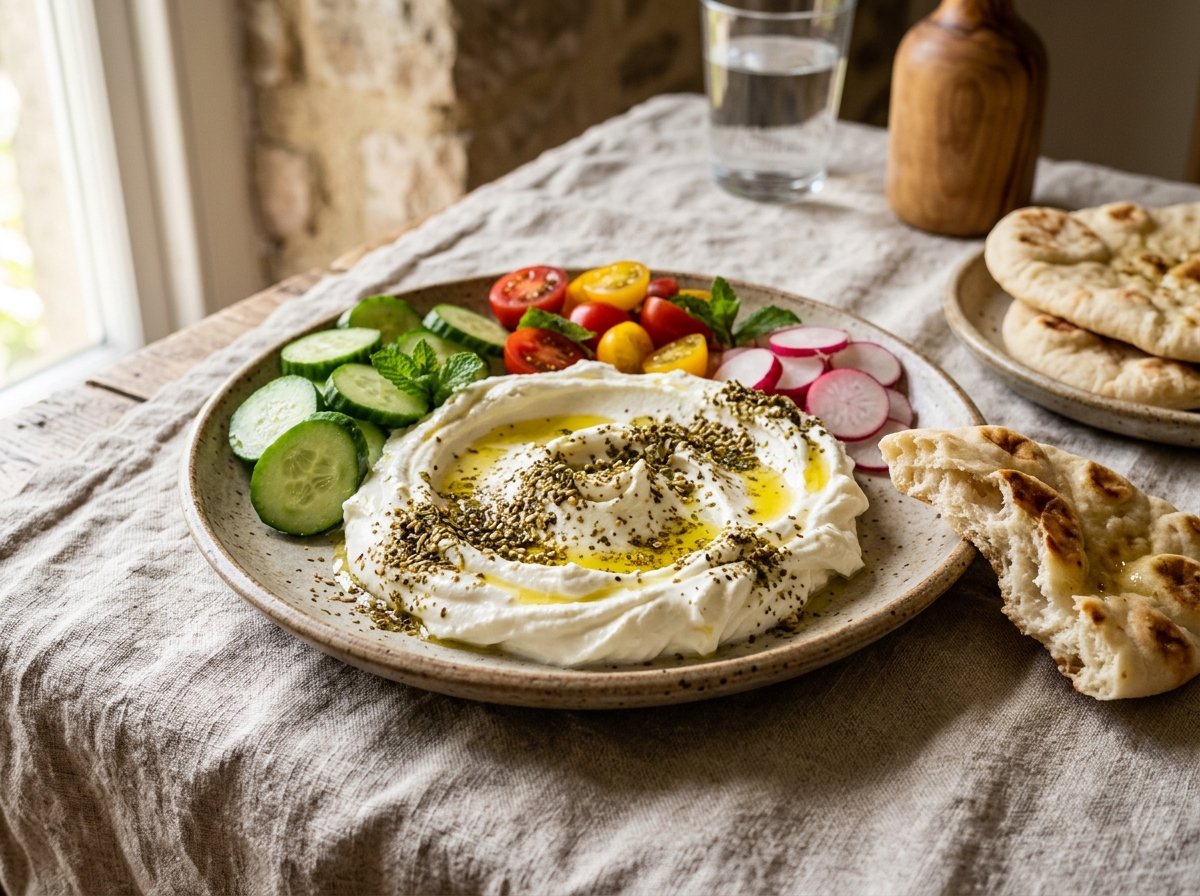
Labneh is strained yogurt, thicker and tangier than Greek yogurt, and it’s one of the best breakfast foods you’ve probably never made. Get the full recipe Spread it on a plate, drizzle olive oil over the top, add a sprinkle of za’atar or dried herbs, and serve with sliced cucumber, tomatoes, olives, and flatbread.
It sounds simple because it is. But it’s also surprisingly filling, and it takes about four minutes to put together.
You can buy labneh at most Middle Eastern grocery stores and a growing number of supermarkets. You can also make it yourself by straining full-fat plain yogurt overnight through a fine mesh sieve or cheesecloth. What you get is a soft, spreadable cheese that keeps for a week in the fridge.
Avocado Toast, Done Right
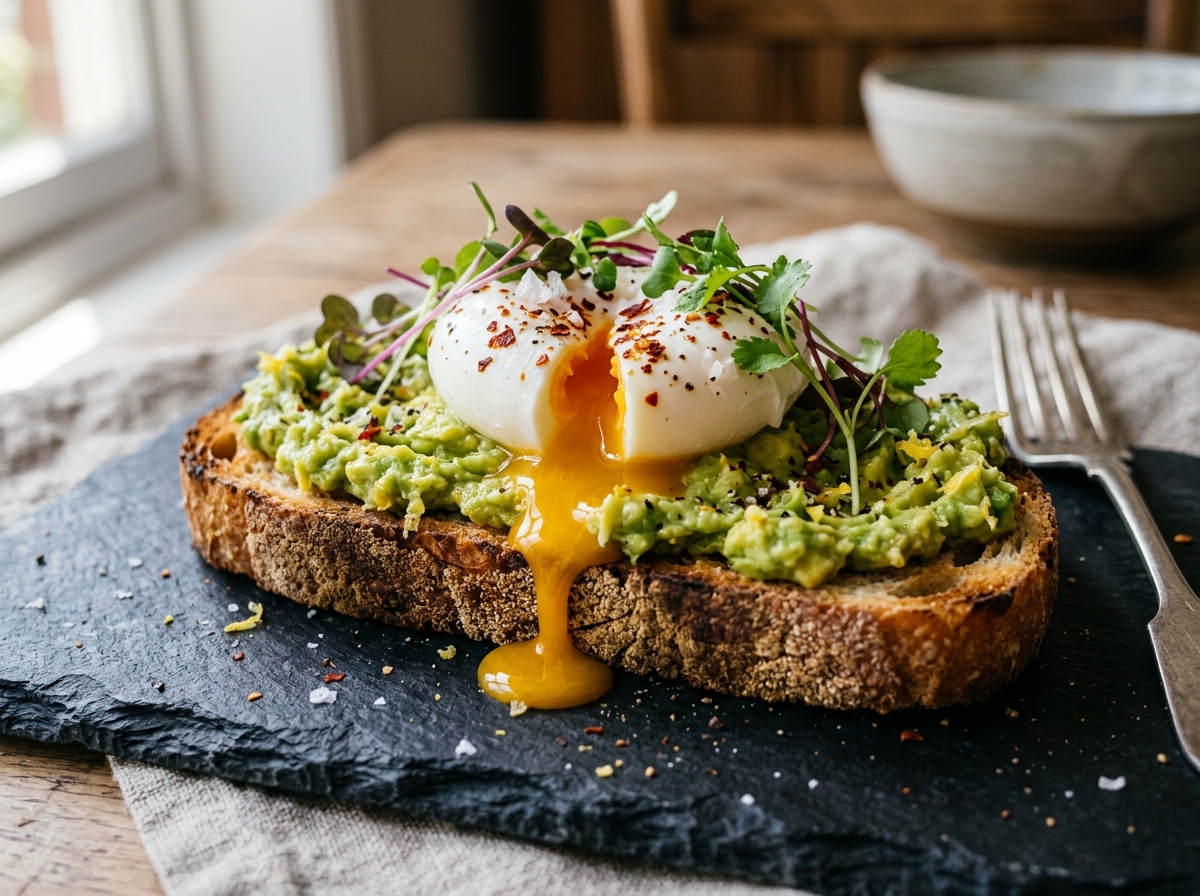
Yes, avocado toast. Get the full recipe The backlash it attracted was always about the Instagram version, not the actual dish. When it’s made properly, it’s a good breakfast.
Properly means this: sourdough or a dense whole grain bread, toasted until genuinely crisp. Mashed avocado seasoned with lemon juice, salt, and pepper. Then the Mediterranean additions that make it worth eating: crumbled feta, a few kalamata olives, a drizzle of olive oil, maybe some thinly sliced red onion. A soft-boiled egg on top if you want more protein.
The feta adds salt and tang. The olives add depth. The result is nothing like the pale, unseasoned version that earned the dish its bad reputation.
Smoked Salmon with Cucumber and Cream Cheese on Rye
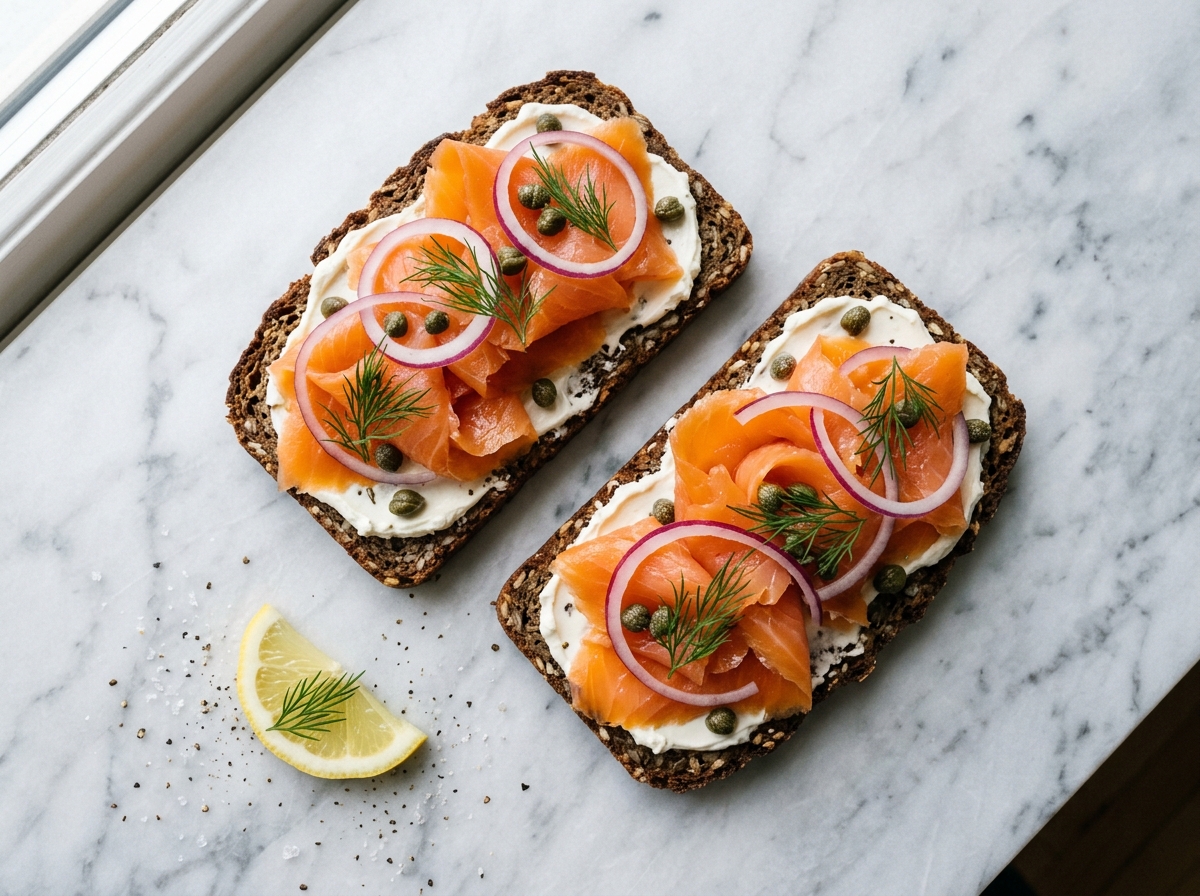
This is the quickest option on the list and one of the most satisfying. Get the full recipe Dense rye bread or dark sourdough, a thin layer of cream cheese or labneh, sliced cucumber, smoked salmon, a squeeze of lemon, and black pepper.
It takes five minutes. It’s high in protein and omega-3 fatty acids. And it keeps you full significantly longer than toast and jam, which is essentially just sugar and flour.
The quality of the salmon matters. The good stuff has a clean, briny taste and a silky texture. The cheap stuff is fine too, but if you’re eating it regularly, it’s worth spending slightly more.
Egg and Vegetable Scramble with Feta
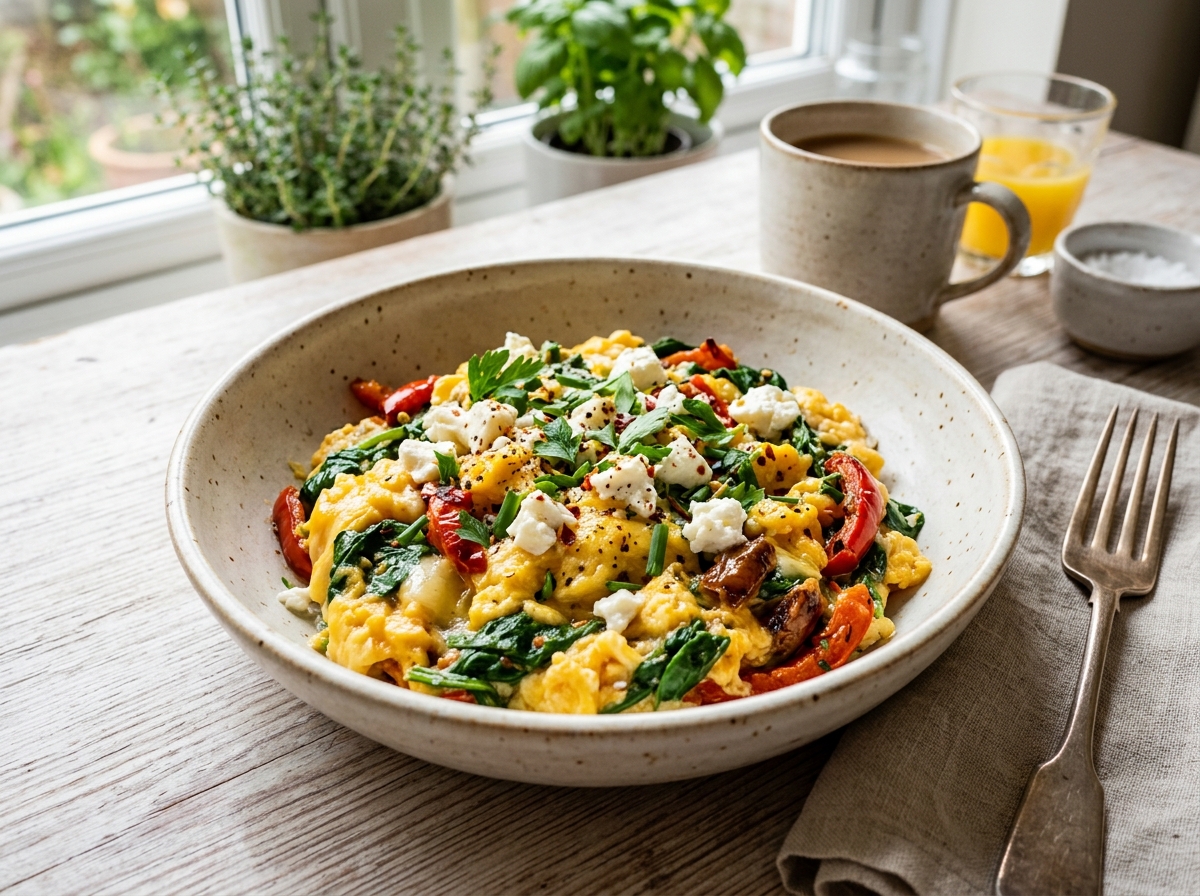
Scrambled eggs feel ubiquitous, but the Mediterranean approach is worth doing. Get the full recipe Olive oil instead of butter. Whatever vegetables you have in the fridge: spinach, courgette, sun-dried tomatoes, roasted peppers. Crumbled feta stirred in at the end.
The trick is low heat and patience. Fast-scrambled eggs over high heat go rubbery. Slow-scrambled eggs over medium-low heat stay soft and creamy. Four or five minutes feels like a long time when you’re hungry in the morning. It’s worth it.
A Word on Bread
Good bread is central to the Mediterranean breakfast table, and it’s worth getting right. Sourdough, dense rye, seeded whole grain, flatbreads, all of these work. The soft, pre-sliced white loaves that fill most supermarket shelves don’t. Not because of some rigid rule, but because they’re nutritionally thin and they go from toast to stale quickly.
Most cities have at least one decent bakery making real bread now. If you’re going to build a better breakfast habit, the bread is an easy place to start.
The Bigger Point
The reason these breakfasts work isn’t because they follow a set of dietary rules. It’s because they use real ingredients in combinations that taste good and keep you satisfied. Olive oil, eggs, yogurt, vegetables, good bread, these aren’t superfoods. They’re just food.
You don’t need to eat perfectly every morning. You need to eat something that keeps you going until lunch without sending your blood sugar on a round trip. These do that. Most of them take under 15 minutes. None of them require you to suffer.
Pick one. Make it tomorrow. See how 11am feels.
Recipes in This Post
Each recipe below has its own full post with a structured recipe card, including prep time, cook time, servings, and step-by-step instructions.
- Shakshuka – eggs poached in spiced tomato sauce with feta, 25 minutes, one pan
- Greek Yogurt Bowl with Honey and Walnuts – five minutes, no cooking, high protein
- Labneh with Vegetables and Flatbread – strained yogurt mezze-style breakfast
- Avocado Toast with Poached Egg – sourdough, ripe avocado, poached egg, 10 minutes
- Smoked Salmon on Rye with Cream Cheese – no cooking, five minutes, high protein
- Egg and Vegetable Scramble with Feta – spinach, roasted peppers, crumbled feta, 13 minutes
If keeping inflammation low is a goal, anti-inflammatory breakfast ideas takes the same food-first approach and explains which specific ingredients do the most work.
For mornings when you want something heartier and specifically savoury, savory breakfast ideas covers the full range.
If eggs aren’t on the table, high-protein breakfasts without eggs shows how to hit the same numbers with different ingredients.
If you want to carry this thinking across the whole week rather than just mornings, high-protein meal prep is the natural next step.