Eggs are the default answer to every “high-protein breakfast” question. Which is fine until you’re eating them every single day, you’ve developed an aversion, you’re vegan, or you just want something different. There are good options beyond eggs, but most “egg-free breakfast” lists replace them with granola bars and protein powders, which is not the same thing at all.
These are real breakfasts with real protein, built from whole foods.
Key Takeaways
– You don’t need eggs or protein powder to hit 20-30g of protein at breakfast. Greek yogurt, cottage cheese, smoked salmon, lentils, and nut butters all contribute meaningfully.
– According to the Harvard T.H. Chan School of Public Health, distributing protein across meals supports muscle maintenance better than concentrating it in one sitting.
– Several of these options contain more protein per serving than two eggs (12g).
– None involve a blender or a supplement.
Greek Yogurt with Walnuts, Seeds, and Berries
Full-fat Greek yogurt is one of the most protein-dense breakfast foods that isn’t eggs. A 200g serving typically contains 17-20g of protein, depending on the brand, along with probiotics, calcium, and a decent amount of fat that keeps you satisfied past the first hour.
The mistake most people make is buying low-fat flavoured yogurt, which is lower in protein, higher in sugar, and less filling. Full-fat plain is what you want. Add texture and nutrition with a tablespoon of mixed seeds, a small handful of walnuts, and whatever fruit is in season. A drizzle of honey finishes it.
That’s a 20g protein breakfast that takes 3 minutes to assemble and tastes genuinely good. Hard to argue with.
Smoked Salmon on Rye with Cream Cheese
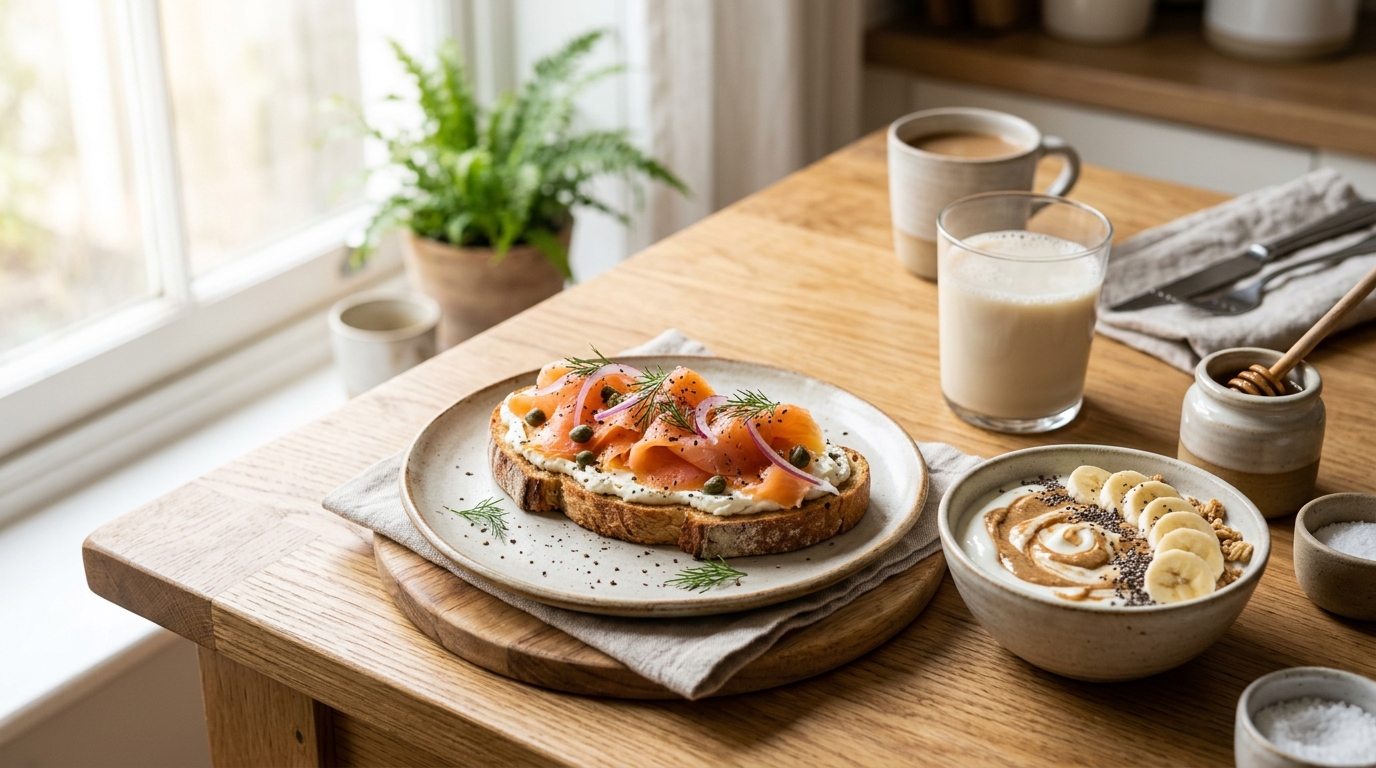
Smoked salmon is around 18-20g of protein per 100g, making it one of the highest-protein breakfasts you can make without touching an egg. It also provides omega-3 fatty acids, which most people don’t get enough of from a standard diet.
Two or three slices of dark rye bread, a layer of cream cheese or labneh, smoked salmon, thin-sliced cucumber, a squeeze of lemon, capers if you have them, black pepper. Five minutes. Around 25g of protein for the whole plate.
The rye bread matters. It’s denser and higher in fiber than standard bread, which means it digests more slowly and contributes to the sustained energy you want from breakfast.
Cottage Cheese Bowl
Cottage cheese fell out of fashion somewhere in the 1990s and never quite came back, which is a shame because it’s one of the better protein sources in the dairy aisle. Low-fat cottage cheese contains roughly 12g of protein per 100g. A decent serving gives you 20-25g.
It works well sweet or savory. Sweet: cottage cheese with sliced peach or nectarine, a drizzle of honey, and some crushed walnuts. Savory: cottage cheese with sliced tomato, cucumber, olive oil, and a pinch of za’atar or dried herbs.
The savory version surprises most people. It’s closer to a Middle Eastern breakfast spread than anything Western, and it works well.
Lentil and Vegetable Hash
This sounds like more effort than it is. If you have a portion of cooked lentils in the fridge (cook a batch on Sunday and they keep for 5 days), this takes about 8 minutes.
Heat olive oil in a pan over medium heat. Add diced red onion and peppers, cook for 3 minutes. Add the lentils, a pinch of cumin and smoked paprika, salt and pepper. Cook for another 4 to 5 minutes until everything is warmed through and slightly crisp at the edges. Serve with a dollop of Greek yogurt on the side.
Lentils contain around 9g of protein per 100g cooked, plus significant fiber and iron. The yogurt adds another 8-10g. Research from NCBI consistently identifies legumes as among the most effective foods for sustained satiety, partly because the protein and fiber work together to slow digestion.
Nut Butter on Whole Grain Toast with Hemp Seeds
Nut butter is not a high-protein food on its own. Two tablespoons of almond butter contains about 7g of protein, which is a supporting role, not a lead. But add two tablespoons of hemp seeds on top (10g of protein, complete amino acid profile), spread onto dense seeded bread, with sliced banana or berries on top, and you’ve built something nutritionally solid.
Hemp seeds are one of the most complete plant proteins available. They’re also bland enough that they blend into almost anything without announcing themselves. Worth keeping in the cupboard.
Smoked Mackerel on Toast
Mackerel doesn’t get the attention it deserves. It’s cheaper than salmon, higher in omega-3 fatty acids, and frankly better tasting when eaten with the right accompaniments. A 100g fillet contains around 20g of protein.
Flake smoked mackerel over thick toast, add sliced cucumber, a squeeze of lemon, and some horseradish cream or wholegrain mustard. It takes four minutes and it’s one of the more substantial breakfasts on this list.
If you’ve never eaten mackerel for breakfast, try it once. It works.
The Broader Point
Eggs are genuinely good. This isn’t anti-egg. But building your protein habits around a single food creates a monotony problem, and monotony is what ends most good habits. Having four or five reliable egg-free options in rotation means you’re not white-knuckling breakfast variety. You’re just rotating through things you actually enjoy.
Pick two of these and add them to your week.
These options fit naturally into a Mediterranean breakfast rotation if you’re already eating that way.
If you want to extend high-protein eating across the full day rather than just mornings, high-protein meal prep is the most practical way to make it consistent.