The case for eating more seafood is strong. The case for eating the right seafood is even stronger. Not all fish is equal from a sustainability standpoint, and it matters: global fish stocks are under serious pressure, and the choices made in individual kitchens, multiplied across millions of households, have real cumulative effects.
This isn’t about abstinence. It’s about making slightly better choices with the same budget and the same amount of cooking effort. The sustainable options are also, in many cases, the most nutritious and the most flavourful.
Key Takeaways
– The Marine Stewardship Council certifies fisheries meeting standards for environmental sustainability. Look for the blue MSC label when buying.
– Smaller, faster-breeding fish like sardines, mackerel, and anchovies are significantly more sustainable than large predatory species and are also among the most nutritious.
– Farmed shellfish (mussels, oysters, clams) have among the lowest environmental footprints of any animal protein.
– Tinned fish is one of the most sustainable and nutritious formats available, tinning happens at the source, reducing waste and extending shelf life.
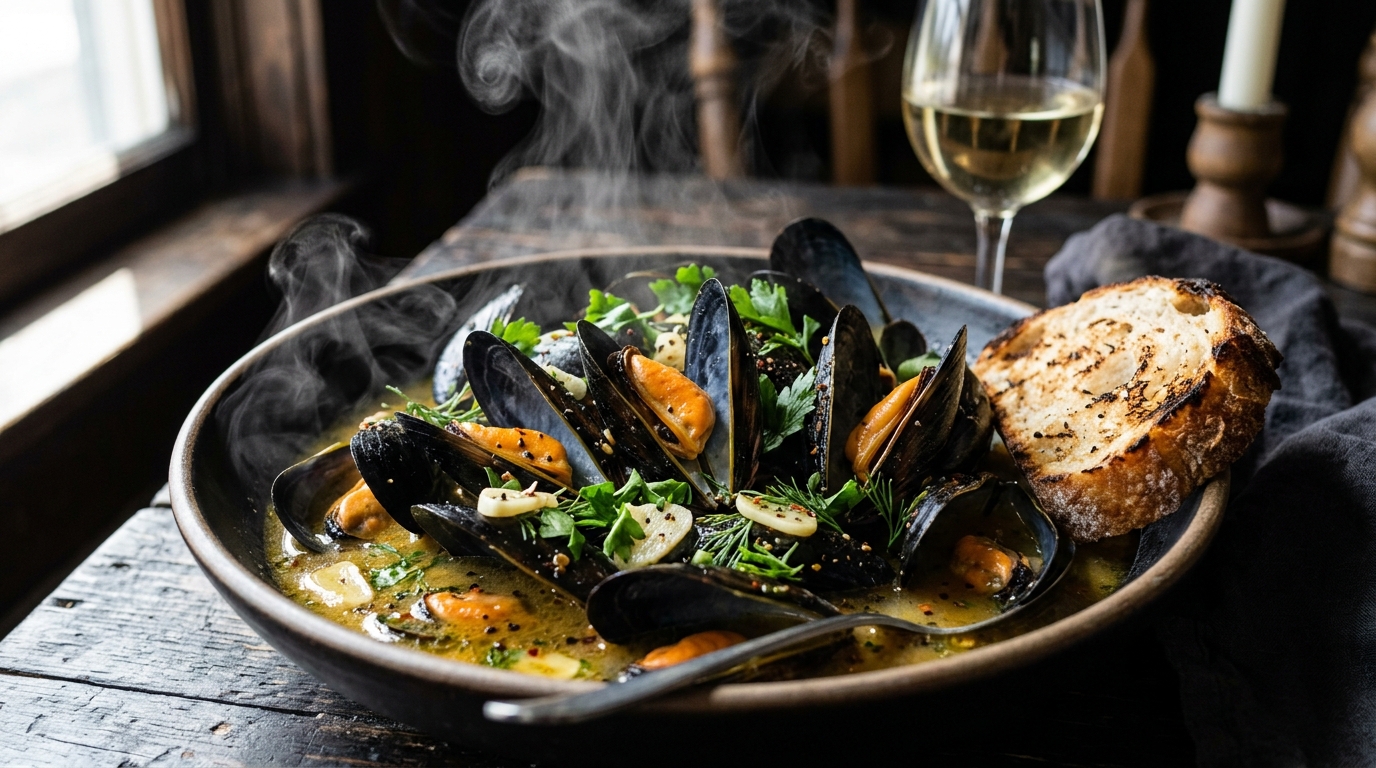
Mussels in White Wine and Garlic
Mussels are the most sustainable seafood choice on this list and arguably one of the most enjoyable eating experiences you can have for very little money. They’re filter feeders that require no feed, no freshwater, and no land, growing them actually improves the water quality around them.
They also take less than 10 minutes to cook.
Rinse and debeard 1kg of mussels (discard any that are open and don’t close when tapped). In a large pot with a lid, heat 2 tablespoons of olive oil over medium heat. Add 4 garlic cloves (sliced) and a pinch of chilli flakes. Cook for 1 minute. Add 200ml of dry white wine, bring to a boil, and add the mussels. Cover and cook for 4 to 5 minutes, shaking the pot once, until the mussels have opened.
Discard any that haven’t opened. Transfer to bowls. Add a large knob of butter and a handful of fresh parsley to the cooking liquid, swirl together, and pour over. Serve with crusty bread.
This is the definition of sustainable eating done right. It costs very little, requires minimal effort, and produces something that feels genuinely luxurious.
Sardine Pasta with Capers and Breadcrumbs
Tinned sardines are among the most sustainable fish available, wild-caught from well-managed stocks, and nutritionally exceptional. This Sicilian-inspired pasta uses them properly, cooked briefly into a sauce that makes them taste nothing like they do straight from the tin.
Cook 300g of pasta (linguine or spaghetti) until al dente. While it cooks, heat 3 tablespoons of olive oil in a wide pan. Add 3 garlic cloves (sliced) and cook for 1 minute on low. Add the drained sardines from two tins and press them into the oil, breaking them up, they’ll almost dissolve into the sauce. Add a tablespoon of capers, a pinch of chilli flakes, and the zest of half a lemon.
Toss the pasta in the sardine sauce with a splash of pasta cooking water. Finish with toasted breadcrumbs fried in olive oil with garlic (they replace parmesan here, adding crunch rather than richness) and fresh parsley.
This is a dish that surprises people. The sardines aren’t identifiable as sardines anymore, they’ve become the sauce. It’s one of those things you cook once and keep in the repertoire permanently.
Mackerel with New Potatoes and Green Beans
Fresh mackerel is fast to cook, inexpensive, and consistently well-managed in UK waters. Hand-line caught mackerel is among the most sustainable choices available.
Boil new potatoes until tender, adding trimmed green beans in the last 4 minutes. Drain. Dress with a tablespoon of olive oil, a teaspoon of Dijon mustard, red wine vinegar, salt, and pepper. Grill two mackerel fillets under a high heat for 4 minutes per side. Serve on the dressed vegetables with lemon.
Simple, fast, nutritionally complete, and sustainable. The mustard dressing is the detail that makes the whole plate work, it adds acidity and a little heat that cuts through the oily fish perfectly.
Tinned Tuna and Lentil Bowl
For days when cooking isn’t happening, this is the sustainable high-protein assembly that requires nothing from the hob.
Drain a tin of tuna in spring water (line-caught, MSC certified if available) and a tin of Puy or green lentils. Combine with diced cucumber, cherry tomatoes, red onion, fresh herbs, and a simple dressing of olive oil, lemon, salt, and pepper. Add some olives and a spoonful of Greek yogurt if you want more substance.
The lentils provide fiber and additional protein alongside the tuna. The whole bowl comes to around 35g of protein and takes less than 5 minutes to assemble.
Clam and Chickpea Stew
Clams have an even smaller environmental footprint than mussels. They’re filter feeders that clean the water as they grow, require no external feed, and regenerate quickly. Tinned clams are a practical alternative to fresh for most weeknight cooking.
Heat olive oil in a pan. Add garlic, a pinch of chilli, and sliced fennel. Cook for 5 minutes. Add 1 tin of chickpeas, 1 tin of tomatoes, 150ml of white wine, and simmer for 10 minutes. Add 2 tins of clams (drained) in the last 2 minutes, just long enough to warm through. Finish with fresh parsley and lemon.
Serve with good bread. This is quick, inexpensive, and genuinely good in a way that makes it hard to believe you’ve made the more environmentally responsible choice by default.
If the nutritional side is as important as the sustainability angle, high-protein fish recipes covers the options with the best protein content and how to cook them simply.