Greek cooking is one of the most naturally healthy cuisines in the world, not because it was designed around nutrition guidelines but because it was built from available ingredients: olive oil, legumes, fish, yogurt, vegetables, and lamb. The Mediterranean diet, now one of the most evidence-backed dietary patterns for longevity and cardiovascular health, is largely Greek in character.
The best Greek recipes are also straightforward. Most of the classics require little technical skill and few expensive ingredients. The flavour comes from the quality of the olive oil, the freshness of the herbs, and the time given for things to cook properly.
Key Takeaways
– The Harvard T.H. Chan School of Public Health identifies the Mediterranean diet, built largely on Greek and Italian food traditions, as one of the most well-evidenced dietary patterns for reducing cardiovascular disease, type 2 diabetes, and overall mortality.
– Greek cooking relies heavily on olive oil, legumes, vegetables, and fish, all foods with strong research support for anti-inflammatory effects.
– Most traditional Greek dishes are naturally high in protein and fiber without any modification.
– The flavours in Greek cooking are bold but achievable: lemon, garlic, oregano, and good olive oil do most of the work.
Horiatiki (Classic Greek Salad)
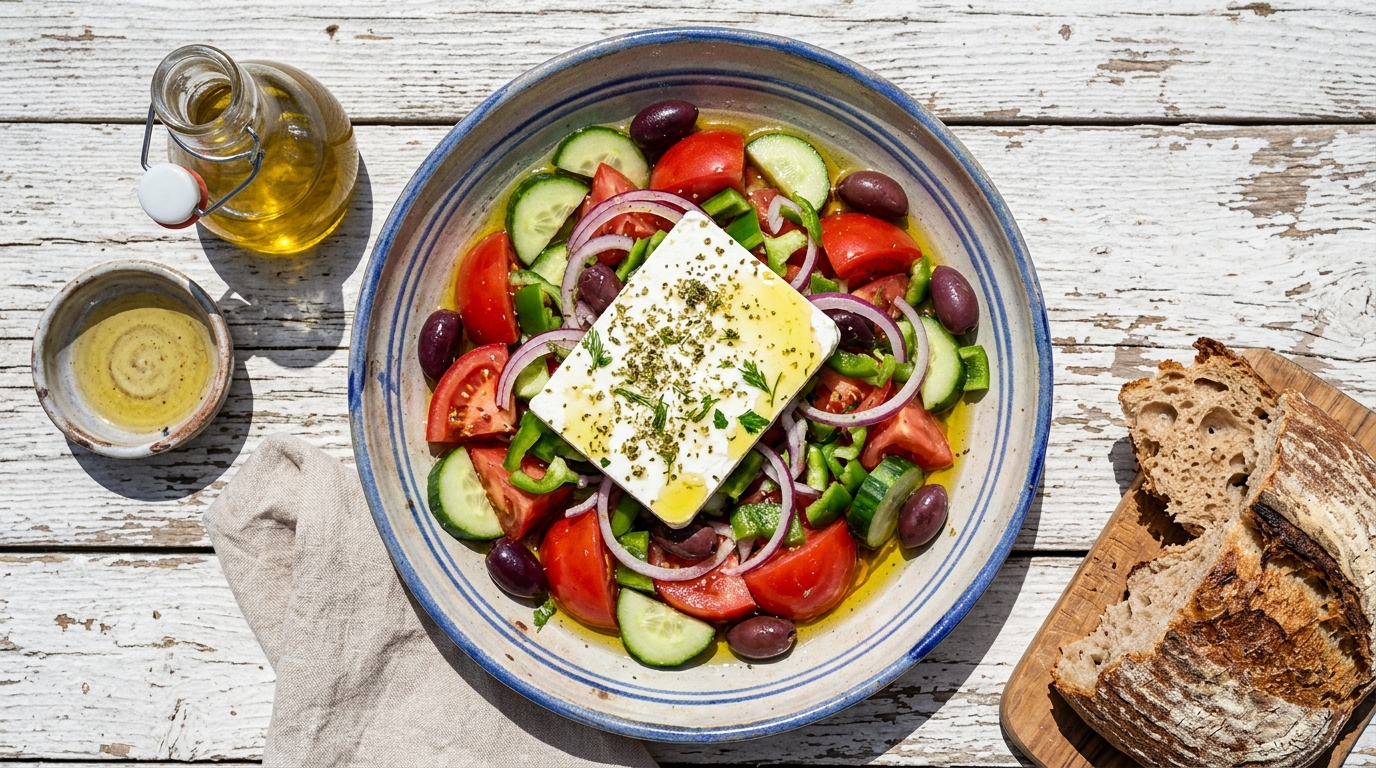
The dish that most defines Greek summer eating. It’s also one of the simplest salads you’ll make, and one of the most satisfying when done with good ingredients.
The recipe is non-negotiable: large chunks of ripe tomato, thick slices of cucumber, thinly sliced red onion, kalamata olives, and a block of good feta (not crumbled, placed on top whole). Season generously with dried oregano, black pepper, and a pinch of salt. Drizzle with the best olive oil you have.
No lettuce. No dressing. The olive oil, tomato juices, and feta brine do the work. Serve with good bread.
The quality of the tomatoes matters more than any other variable here. Out-of-season supermarket tomatoes will produce a mediocre result. Wait until they’re in season, or use cherry tomatoes on the vine.
Fasolada (Greek White Bean Soup)
Fasolada is the national dish of Greece, which tells you something about the Greek relationship with beans that contemporary Western food culture has largely forgotten. It’s a humble soup: cannellini beans, tomatoes, celery, carrot, and a generous amount of olive oil, and it’s deeply satisfying in a way that speaks to the difference between food made slowly from good ingredients and food made quickly from everything.
Soften diced onion, celery, and carrot in olive oil for 8 minutes. Add 3 garlic cloves, a tin of tomatoes, 2 tins of cannellini beans (drained), 600ml of vegetable stock, dried thyme, and a bay leaf. Simmer for 25 to 30 minutes. Mash a few beans against the side of the pot to thicken slightly.
Finish with a very generous drizzle of raw olive oil, lemon juice, and fresh parsley. The raw olive oil added at the end is traditional and makes a noticeable difference, it adds a freshness and slight bitterness that the cooked oil at the start doesn’t replicate.
Baked Fish with Lemon and Oregano (Psari Plaki)
Psari plaki is a traditional Greek way of baking fish: in a bath of olive oil, tomatoes, onions, and lemon with plenty of dried oregano. It works with almost any white fish and produces a dish that tastes genuinely Greek in a way that most “Mediterranean-inspired” recipes don’t.
Slice a large onion and cook in olive oil until soft. Add 3 sliced garlic cloves, 1 tin of tomatoes, the juice of 1 lemon, and a teaspoon of dried oregano. Simmer for 10 minutes. Pour into a baking dish, lay 2 to 4 cod or sea bass fillets on top, season, drizzle with more olive oil, and add slices of lemon on top.
Bake at 190°C for 20 to 25 minutes until the fish is cooked through and the sauce is bubbling. Serve with bread and a simple salad.
Dakos (Cretan Barley Rusk Salad)
Dakos is the Cretan version of bruschetta, made with barley rusks instead of bread and topped with grated ripe tomato, crumbled feta, olives, and oregano. It’s a traditional Cretan breakfast but works equally well as a light lunch or starter.
Moisten barley rusks (or thick slices of day-old sourdough) with water or olive oil. Grate a large ripe tomato directly onto each rusk. Top with crumbled feta, a few olives, dried oregano, black pepper, and a generous drizzle of olive oil.
This takes five minutes. The combination of whole grain, tomato, cheese, and olive oil ticks almost every box in the research on Mediterranean diet components and Mediterranean health outcomes.
Tzatziki
This is as much a condiment as a recipe, but it’s worth making from scratch because the supermarket versions are a shadow of the real thing.
Grate a whole cucumber and squeeze it thoroughly in a clean cloth or your hands to remove as much moisture as possible. This step is what separates good tzatziki from watery tzatziki. Combine the squeezed cucumber with 400g of full-fat Greek yogurt, 2 grated garlic cloves, 2 tablespoons of good olive oil, a tablespoon of fresh dill or mint, and the juice of half a lemon. Season well.
Serve with crudites, grilled meat or fish, or just with flatbread. It keeps in the fridge for 3 days and gets better after a few hours as the garlic mellows slightly.
The Greek approach to breakfast follows the same logic. Mediterranean breakfast recipes covers the morning version of this food in detail.