Fish is probably the best high-protein food in the kitchen, and it’s consistently underused. Most people’s weekly protein rotation is chicken, chicken, eggs, and more chicken, with the occasional piece of beef thrown in. Fish covers the same protein requirements, adds omega-3 fatty acids that most diets are genuinely short on, and cooks faster than almost any other animal protein.
These recipes prioritise protein content alongside flavour. There’s no version of healthy eating that requires you to eat things you don’t enjoy.
Key Takeaways
– Most oily fish (salmon, mackerel, sardines) contains 20-25g of protein per 100g alongside significant omega-3 fatty acids. White fish (cod, haddock, sea bass) contains 18-22g of protein per 100g with very little fat.
– The British Dietetic Association recommends two portions of fish per week, including one oily fish, for cardiovascular and brain health.
– Fish cooks faster than any other animal protein. Most fillets need 10 to 15 minutes in the oven or 3 to 5 minutes per side in a pan.
– These recipes range from 25g to 35g of protein per serving.
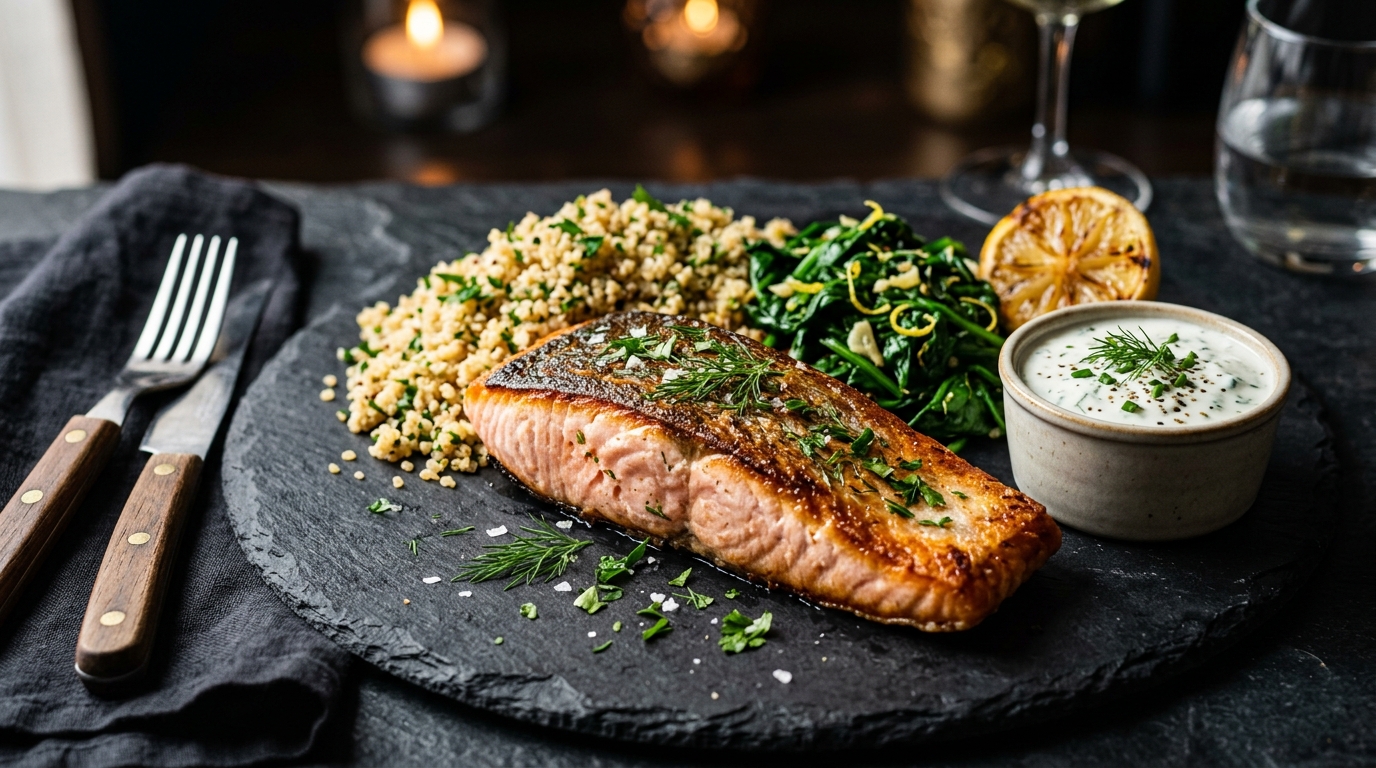
Pan-Seared Salmon with Lemon and Capers
Salmon is the most protein-dense fish you’re likely to cook regularly, with around 25g per 100g portion alongside 2-3g of omega-3 fatty acids EPA and DHA. It also tolerates high heat well, which means you can get proper caramelisation and flavour development in 6 to 8 minutes.
Pat two salmon fillets completely dry (moisture is the enemy of a good sear). Heat a heavy pan over high heat until genuinely hot. Add a tablespoon of olive oil. Place the salmon skin-side up and press gently for 10 seconds to ensure contact. Cook for 3 to 4 minutes without touching it. Flip, cook for 2 to 3 minutes more.
Rest the salmon for 2 minutes. While it rests, add a tablespoon of butter, 2 tablespoons of capers, and the juice of half a lemon to the pan. Swirl for 30 seconds to form a quick pan sauce. Pour over the fish.
This is a restaurant-quality result that takes 12 minutes. Serve with wilted greens and some roasted potatoes or brown rice.
Grilled Mackerel with Mustard and Herbs
Mackerel is the most nutritionally dense fish on this list and the most underrated. It contains slightly more omega-3 fatty acids than salmon, more selenium, and more vitamin D. It’s also cheaper, more sustainable, and when cooked properly, it has a rich, bold flavour that stands up to assertive seasoning.
Score the skin of two mackerel fillets three or four times. Mix 1 tablespoon of wholegrain mustard, a teaspoon of honey, fresh thyme, and black pepper. Rub into the fish. Grill under a high heat for 4 to 5 minutes per side until the skin is crisp and the flesh is cooked through.
Serve with horseradish cream and a simple salad of cucumber, red onion, and dill. The mustard and horseradish cut through the richness of the fish. It’s a complete dinner in under 20 minutes.
Baked Sea Bass with Fennel and White Wine
Sea bass is a lighter, more delicate fish than salmon or mackerel, with around 20g of protein per fillet. It suits the Mediterranean treatment perfectly.
Slice a fennel bulb thinly and spread in the bottom of a baking dish with olive oil, garlic, salt, and pepper. Place the sea bass fillets on top, season, pour over 100ml of dry white wine and a squeeze of lemon. Cover with foil and bake at 200°C for 15 minutes.
The fennel softens completely and absorbs the fish cooking juices, creating an almost sauce-like base. Remove the foil for the last 3 minutes to colour the fish slightly. Finish with fresh dill and more lemon.
Sardines on Toast with Tomato and Chilli
Tinned sardines are one of the most nutritionally complete foods available. They contain around 25g of protein per tin, high levels of omega-3s, calcium (from the bones), vitamin D, and selenium. They’re also one of the most sustainable fish you can eat, which matters.
The problem most people have with sardines is that they’ve eaten them straight from the tin. That’s not the move.
Toast two thick slices of sourdough until properly crisp. Rub the surface with a cut garlic clove. Spread a tablespoon of tomato paste thinly across each slice. Drain the sardines, lay them on top, press gently to flatten slightly. Add sliced fresh tomato, a pinch of chilli flakes, fresh parsley, and a squeeze of lemon.
This takes five minutes and provides around 30g of protein. It’s the kind of thing you eat once and then add to regular rotation immediately.
Tuna and White Bean Salad
Tinned tuna in spring water is around 26g of protein per 100g, making it the most practical high-protein pantry ingredient for fast meals. This salad combines it with white beans (additional protein and fiber), red onion, cherry tomatoes, good olive oil, and lemon.
Drain a tin of tuna and a tin of cannellini beans. Combine with halved cherry tomatoes, very thinly sliced red onion, fresh parsley, and a dressing of olive oil, lemon juice, salt, and pepper. Taste and adjust.
Add a handful of rocket and some shaved parmesan or a few olives if you want more substance. This keeps in the fridge for a day (without the rocket, which wilts). It provides around 30g of protein per generous serving and zero cooking.
For a focused look at one of the most versatile white fish, baked cod with vegetables covers three approaches that work on any weeknight.
Sustainable seafood recipes is worth reading alongside this if the environmental side matters to you. The most sustainable options are also often the most nutritious.
If you’re building these meals into a broader weekly plan, high-protein meal prep covers how to batch fish dishes alongside other protein sources.