Turmeric is the most researched anti-inflammatory spice on the planet. The active compound, curcumin, has been studied in hundreds of trials for its effects on inflammatory markers, joint pain, metabolic health, and oxidative stress. The evidence is strong enough that it shows up consistently in reviews by the National Institutes of Health.
The problem with how most people use turmeric: they don’t use enough of it, and they don’t use it with fat and black pepper, which are required for curcumin to be absorbed properly. A half-teaspoon of turmeric in a smoothie without black pepper passes through largely without effect. These recipes use turmeric properly.
Key Takeaways
– Piperine in black pepper increases curcumin absorption by up to 2000%. Never use turmeric without black pepper in the same dish.
– Curcumin is fat-soluble. Always combine turmeric with a fat source: olive oil, coconut milk, full-fat dairy, or avocado.
– Therapeutic amounts in most clinical studies are 500-1000mg of curcumin per day, roughly equivalent to 1.5-3 teaspoons of turmeric powder.
– These recipes achieve meaningful amounts of turmeric in formats that actually taste good.
Turmeric Roasted Cauliflower
Cauliflower is one of the best vehicles for turmeric in cooking. The florets absorb spice well, and the roasting process develops a deep, nutty flavour that balances turmeric’s earthiness.
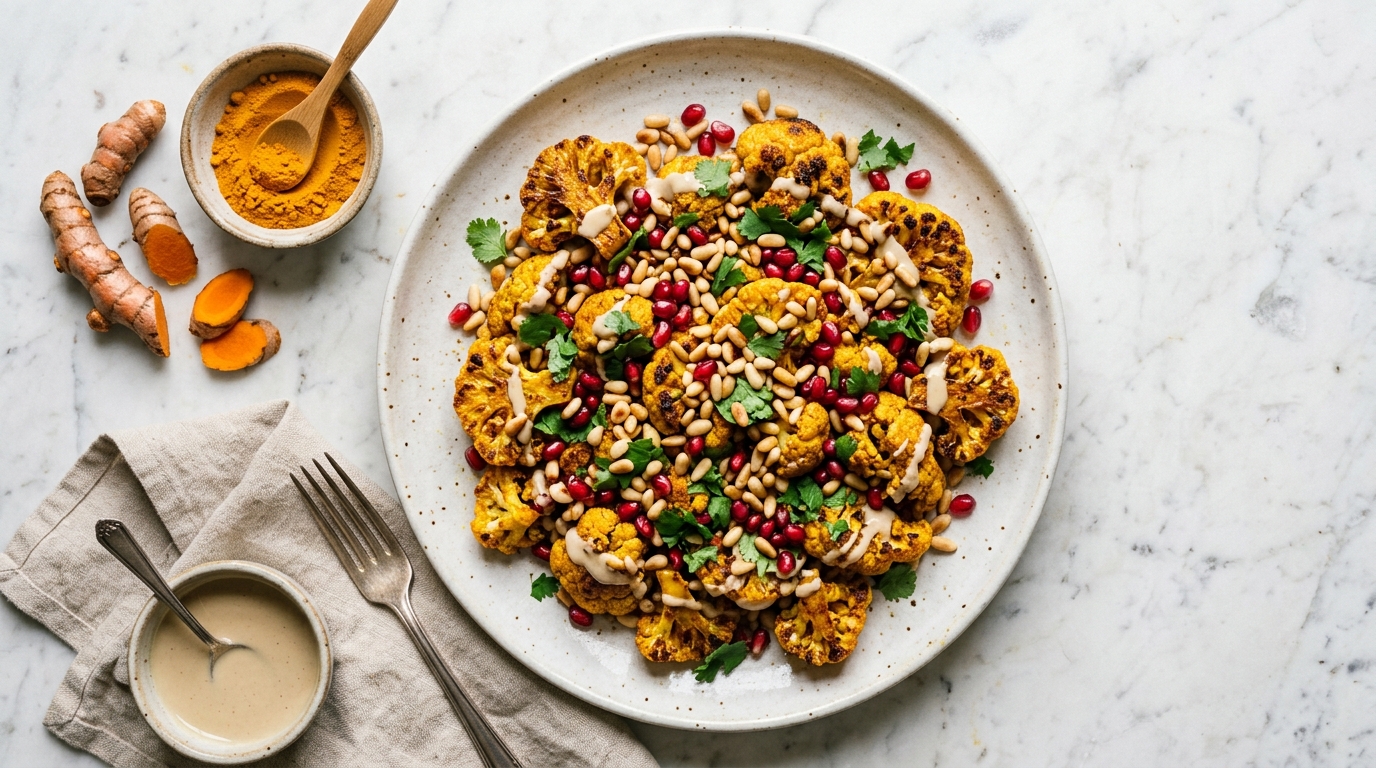
Toss a whole head of cauliflower florets with 3 tablespoons of olive oil, 1.5 teaspoons of turmeric, 1 teaspoon of cumin, half a teaspoon of smoked paprika, a generous pinch of black pepper, and salt. Spread on a baking tray and roast at 210°C for 25 to 30 minutes until golden and caramelised at the edges.
Serve with tahini drizzled over, fresh coriander, and pomegranate seeds. The combination of cauliflower, olive oil, and black pepper covers the fat and piperine requirements for maximum curcumin absorption. This works as a side dish, as a main over grains, or stuffed into a flatbread with yogurt.
Turmeric Salmon with Spinach
Salmon and turmeric are a natural pairing. The richness of the fish stands up to the earthy spice, and the omega-3 fatty acids in salmon have their own independent anti-inflammatory effect, making this one of the most densely anti-inflammatory meals you can put together.
Mix 1 teaspoon of turmeric, half a teaspoon of garlic powder, a pinch of black pepper, and 1 tablespoon of olive oil into a paste. Rub over two salmon fillets and bake at 200°C for 12 to 15 minutes. While the salmon cooks, wilt a large handful of spinach in a pan with olive oil and garlic.
Serve the salmon on the spinach, with lemon wedges. The whole thing takes 20 minutes. It provides around 30g of protein per serving, plus meaningful amounts of curcumin in the right fat context.
Golden Turmeric Rice
A simple side dish that adds turmeric to a meal without any extra effort. Cook basmati or brown rice as usual, but toast 1 teaspoon of turmeric in a dry pan for 30 seconds before adding the water. Add a bay leaf, a pinch of black pepper, and a knob of butter or a drizzle of olive oil to the finished rice.
The result is fragrant, slightly golden, and pairs well with almost any protein or roasted vegetable. The butter or olive oil ensures the curcumin is absorbed. The black pepper does the rest.
Turmeric and Chickpea Stew
A one-pot vegetarian dinner that delivers turmeric in quantity. Heat 2 tablespoons of olive oil in a deep pan. Add a diced onion, cook for 5 minutes. Add 4 garlic cloves, 1.5 teaspoons of turmeric, 1 teaspoon of cumin, 1 teaspoon of coriander, and black pepper. Cook for 2 minutes. Add 2 tins of chickpeas (drained), 1 tin of tomatoes, and 400ml of stock. Simmer for 20 minutes. Stir in a large handful of spinach until wilted.
Serve with brown rice or flatbread, and a dollop of plain yogurt. This is the kind of dinner that costs very little, requires minimal effort, and delivers a therapeutic amount of turmeric across two or three servings.
Turmeric Bone Broth
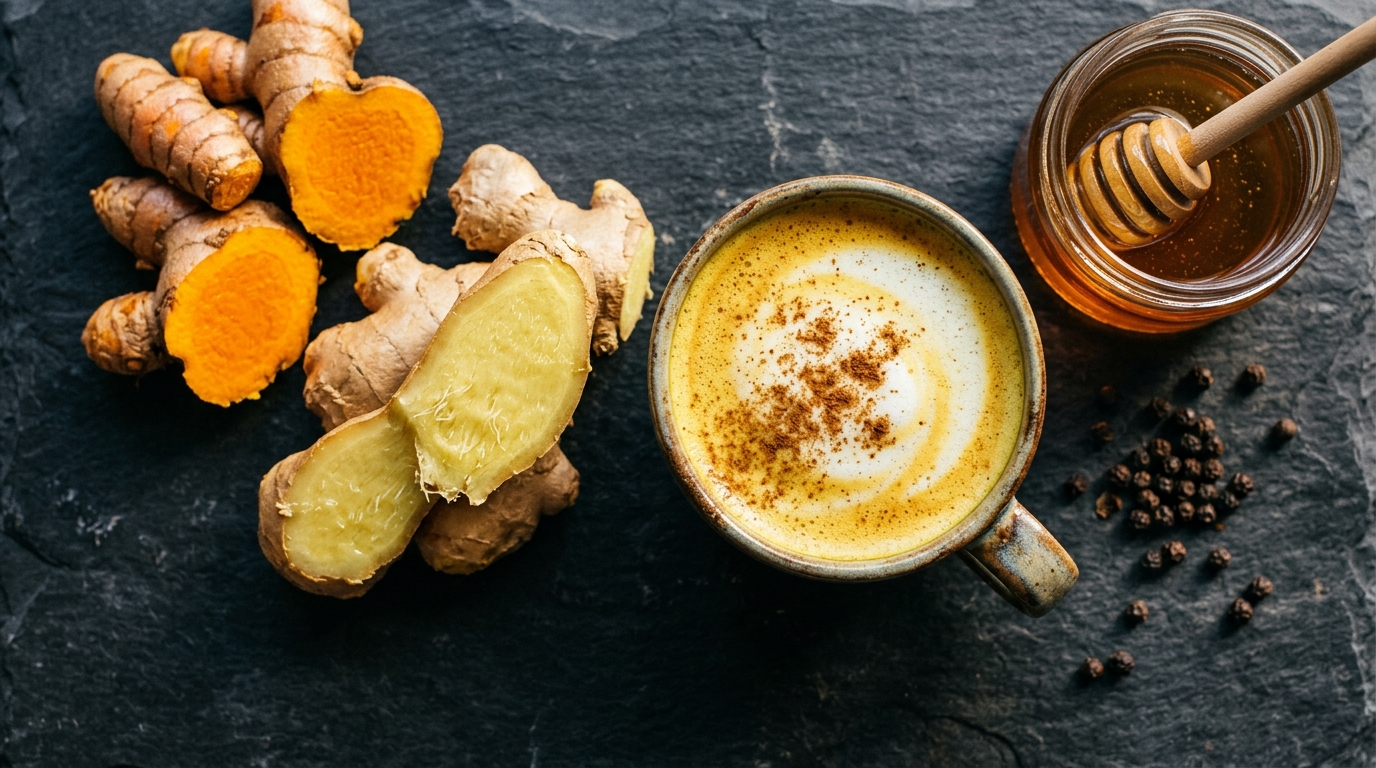
Not a recipe in the conventional sense, more of a practice. Bone broth made with a carcass or marrow bones, simmered for 6 to 8 hours (or 2 hours in a pressure cooker), with a thumb of fresh turmeric, black pepper, and ginger added in the last hour, produces something that is both a good cooking liquid and a genuinely restorative drink.
Use it as the base for soups, risottos, and lentil dishes across the week. Every meal you make with it gets a passive dose of curcumin in the right format, without any extra effort or thought. Research on curcumin’s bioavailability confirms that fat-containing, warm preparations are among the most effective delivery methods, which is exactly what bone broth provides.
The Important Caveat
Turmeric is not a cure and not a substitute for medical treatment. For chronic inflammatory conditions, the research supports it as a dietary adjunct, something that contributes to lower inflammation over time when eaten consistently as part of a whole-food diet, not something that reverses disease on its own.
Eaten regularly in food, with fat and black pepper, it’s one of the better-supported additions you can make to your cooking.
Starting the day with anti-inflammatory food compounds the effect. Anti-inflammatory breakfast ideas covers the morning options in detail.
For dinner, gut-healthy dinner recipes takes a different angle on the same goal: feeding the microbiome rather than targeting specific inflammatory markers.
Ginger and turmeric recipes goes deeper on both spices together, including the stir-fries and soups where fresh root makes the biggest difference.
Oily fish is one of the most consistently anti-inflammatory foods in the research. High-protein fish recipes covers the best options and how to cook them.