Ginger and turmeric are two of the most researched anti-inflammatory spices in common cooking. Turmeric contains curcumin, which has been studied extensively for its effects on inflammatory markers, joint health, and oxidative stress. Ginger contains gingerols and shogaols, with strong evidence for reducing nausea, muscle soreness, and inflammatory cytokines. Together, they appear in cuisines from India to North Africa to Southeast Asia, which suggests generations of cooks discovered their value long before any clinical trials did.
The practical challenge: most people use them too tentatively. A pinch of turmeric in a curry or a slice of ginger in tea barely touches the amounts shown to have clinical effects. These recipes use both spices properly.
Key Takeaways
– Curcumin in turmeric is poorly absorbed on its own. A 2023 review in PubMed confirms that combining turmeric with black pepper (piperine) increases curcumin bioavailability by up to 2000%.
– Ginger has the strongest evidence base of any common spice for reducing post-exercise muscle soreness and nausea.
– Both spices work best as part of a dietary pattern rather than isolated supplements.
– Fat-soluble compounds in turmeric are absorbed better when eaten with a source of fat: olive oil, coconut milk, or full-fat dairy.
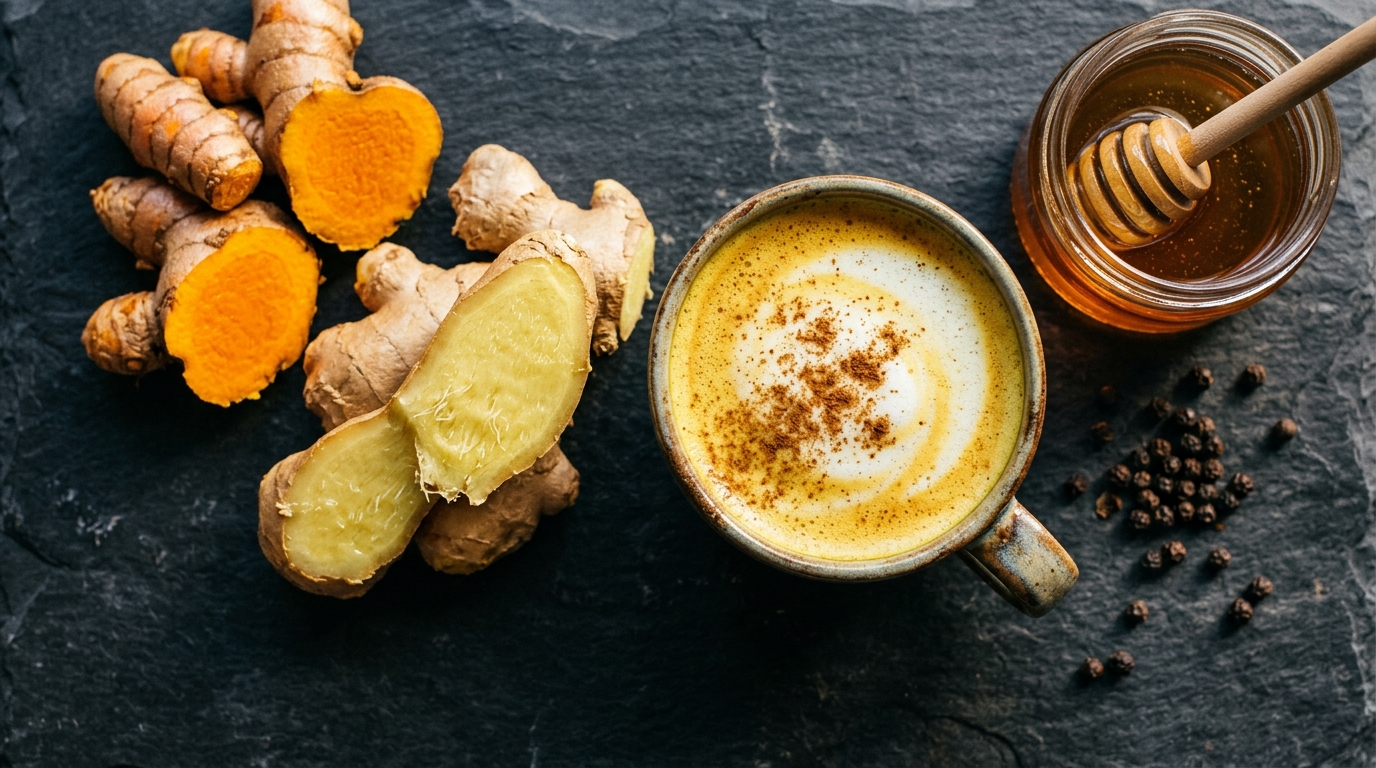
Golden Milk (Turmeric Latte)
Before it became a coffee-shop menu item, golden milk was a traditional Indian preparation called haldi doodh. The reason it survived for generations: it works. Warm milk infused with turmeric, ginger, and black pepper is genuinely soothing, genuinely warming, and, critically, delivers the fat and piperine needed to make the curcumin bioavailable.
Warm 250ml of whole milk or oat milk in a small saucepan. Whisk in 1 teaspoon of turmeric, half a teaspoon of ground ginger, a good pinch of black pepper, and a small amount of honey. Simmer on low for 2 minutes. Pour into a mug.
This is the best version of a warm bedtime drink that exists. It’s also a genuinely practical way to consume therapeutic amounts of both spices without cooking a full meal.
Turmeric and Ginger Chicken Stir-Fry
A weeknight dinner that takes about 25 minutes and delivers both spices in a format that actually tastes like food rather than medicine.
Slice two chicken breasts into strips. Mix a marinade: 2 tablespoons soy sauce, 1 tablespoon grated fresh ginger, 1 teaspoon turmeric, 1 teaspoon sesame oil, a pinch of black pepper. Marinate the chicken for at least 10 minutes. Stir-fry in a hot wok with whichever vegetables you have: broccoli, snap peas, peppers, and spring onions all work well. Serve over brown rice or noodles.
The combination of ginger and turmeric in the marinade means both spices are cooked into the dish rather than added superficially. That matters for flavour and for the way the compounds interact with the fat in the sesame oil.
Ginger and Turmeric Carrot Soup
This is one of the few soups where the spices are doing most of the work. Roast 600g of carrots with olive oil until caramelised. Blend with sautéed onion, garlic, 1 tablespoon of freshly grated ginger, 1 teaspoon of turmeric, 600ml of vegetable stock, and the juice of half a lemon. Season well.
The roasting step is not optional. Caramelised carrots have a depth and sweetness that raw or steamed carrots can’t replicate, and that depth balances the sharp warmth of the ginger beautifully. Serve with a swirl of coconut cream and some pumpkin seeds.
Spiced Turmeric Lentil Soup
Red lentils cook down into a creamy, thick soup base that carries spices exceptionally well. This recipe doubles as a simple dal and as a soup depending on how much stock you add.
Soften a large diced onion in olive oil. Add 3 garlic cloves, 1 tablespoon of freshly grated ginger, 1 heaped teaspoon of turmeric, 1 teaspoon of cumin, and a generous pinch of black pepper. Cook for 2 minutes until fragrant. Add 300g of rinsed red lentils and 1 litre of stock. Simmer for 20 minutes, stirring occasionally. Finish with lemon juice and salt.
This soup improves overnight. Make a large batch, refrigerate, and eat over three days. The anti-inflammatory compounds in both spices are present throughout the week without any additional effort.
Ginger, Turmeric, and Honey Dressing
Not everything has to be a major recipe. This dressing takes 2 minutes and works on salads, grain bowls, roasted vegetables, or as a dipping sauce for flatbread.
Whisk together: 2 tablespoons of olive oil, 1 tablespoon of apple cider vinegar, 1 teaspoon of grated fresh ginger, half a teaspoon of turmeric, 1 teaspoon of honey, a pinch of salt, and a crack of black pepper. Taste and adjust.
The NHS notes that the anti-inflammatory effects of diet are cumulative rather than acute: it’s regular, consistent intake that produces results, not occasional large doses. A dressing you use three times a week is more valuable than a supplement you take twice and forget.
A Note on Fresh vs Ground
Fresh ginger has a brighter, sharper flavour than ground. It works better in stir-fries, dressings, and anything where you want heat and fragrance. Ground ginger is more convenient and holds up better in baked goods and longer-cooked soups. Fresh turmeric is increasingly available in supermarkets and has a slightly earthy, sharper flavour than ground, it’s worth trying if you haven’t.
For the anti-inflammatory compounds specifically, both fresh and ground versions are effective. The difference is almost entirely about flavour.
For a more complete picture of cooking to reduce inflammation, turmeric recipes for inflammation goes further into the research and covers the recipes where it makes the biggest measurable difference.