Sweet breakfasts have a marketing problem they’ve never fully resolved: most of them make you hungry again by 10am. Cereal, toast and jam, even most granolas are built around sugar and refined carbohydrates. They go in fast and they leave fast. You spend the rest of the morning running on empty, making worse decisions, and waiting for lunch.
Savory breakfasts don’t do this. A meal built on protein, healthy fat, and real vegetables digests slowly, delivers sustained energy, and keeps hunger at bay for three to four hours without effort. The research behind this is solid and has been for years.
Key Takeaways
– A study from NCBI found that high-protein breakfasts containing at least 20g of protein significantly reduce appetite and food intake throughout the morning compared to low-protein alternatives.
– Savory breakfasts built on eggs, vegetables, and healthy fats cause far smaller blood sugar spikes than sweet cereal-based meals.
– These ideas work whether you have 10 minutes or 30.
– None of them require anything unusual or hard to find.
Why Sweet Breakfasts Fall Short
There’s nothing wrong with the occasional pastry. The problem is eating something sweet every morning and then wondering why you’re hungry and reaching for snacks before noon.
Refined carbohydrates and added sugars digest quickly. Blood sugar rises, insulin follows, and within an hour or two you’re lower than you were before breakfast. That cycle, repeated daily for years, has real consequences for metabolic health, energy, and concentration.
Protein disrupts the cycle. It digests slowly, triggers satiety hormones more effectively than carbohydrates or fat, and keeps blood sugar stable for longer. That’s the whole argument for savory breakfast in one paragraph.
Eggs Any Way You Like Them
Eggs are the most efficient savory breakfast ingredient in existence. They’re cheap, fast, versatile, and contain about 6g of protein each plus choline, vitamin D, and a range of B vitamins. Two eggs at breakfast gets you to 12g before you’ve added anything else.
The preparation matters less than people think. Scrambled with olive oil, poached on toast, baked in a small dish with some spinach and cherry tomatoes, fried in a lightly oiled pan, they all work. What changes the experience is what you serve them with.
Pair eggs with any of the following and you’ve got a genuinely complete breakfast: wilted spinach, roasted tomatoes, sliced avocado, sautéed mushrooms, good whole grain or sourdough bread, or crumbled feta. Mix and match based on what’s in the fridge.
Avocado Toast with Poached Egg and Seeds
The combination works because every element earns its place. Avocado provides monounsaturated fat that slows digestion and adds creaminess. The egg adds protein. Seeds: pumpkin, sunflower, sesame, add crunch and trace minerals. Good bread adds fiber.
Use sourdough or dense seeded rye, not standard sliced white. Toast it properly. Mash the avocado with lemon juice, salt, and a pinch of chilli flakes. Lay the poached egg on top, scatter a teaspoon of mixed seeds, and finish with a drizzle of olive oil. Takes about 12 minutes. Keeps you going until well after 1pm.
Vegetable and Feta Omelette
An omelette is the fastest way to get a large number of vegetables into breakfast without it feeling like a punishment. The trick is to prep the filling before the egg ever hits the pan.
Sauté whatever vegetables you have for 3 to 4 minutes in olive oil: courgette, peppers, spinach, and red onion all work well. Season them properly. Pour in two or three beaten eggs, let the base set for a minute, add the vegetables and some crumbled feta across one half, fold, and slide onto a plate. That’s it. Start to finish, 10 minutes.
The feta adds salt and protein. The vegetables add bulk and nutrients without adding many calories. The eggs hold it all together. It’s the kind of breakfast that leaves you actually satisfied rather than waiting for the crash.
Warm Grain Bowl with Egg and Greens
If you have leftover grains in the fridge (and the habit of cooking a big batch at the start of the week is genuinely worth having), this takes five minutes.
Warm a portion of quinoa or farro in a pan with a small splash of water or stock. While it heats, wilt a handful of kale or spinach in olive oil with a little garlic. Soft-boil an egg for 6 minutes. Put it all in a bowl, halve the egg, and add whatever dressing you have: tahini and lemon, miso and ginger, or just good olive oil and salt.
This looks like a lunch. It eats like a lunch. It happens to be breakfast, and it is a much better start to the day than anything that comes out of a cereal box.
Baked Eggs in Tomato Sauce
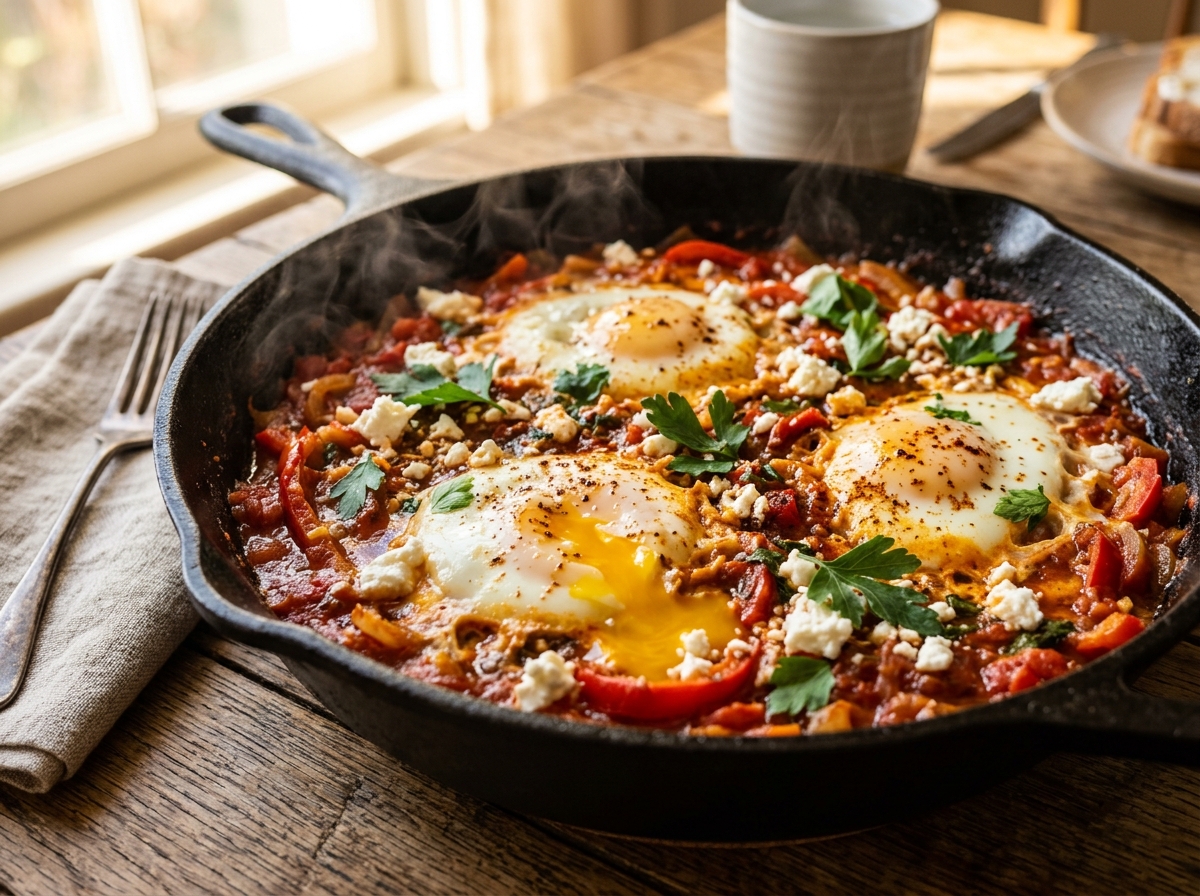
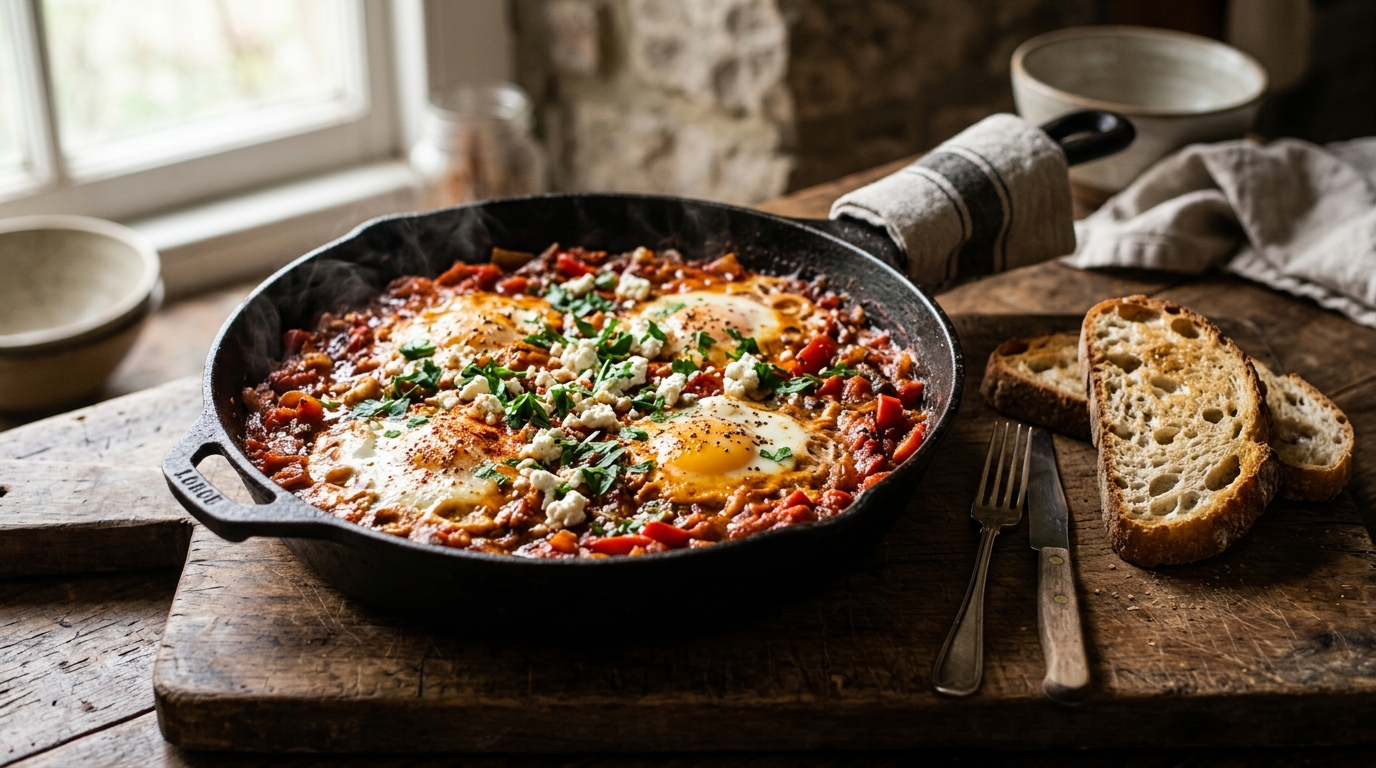
This is a slower option for mornings when you have 25 minutes and nowhere to be. A simplified version of shakshuka: cook down tinned tomatoes with olive oil, garlic, cumin, and smoked paprika until thick. Make wells in the sauce and crack in 2 to 4 eggs. Cover and cook on low until the whites are set but the yolks are still soft.
The British Dietetic Association notes that eggs cooked in tomato-based dishes retain their nutritional value and provide a combination of protein and lycopene (from the tomatoes) that makes this one of the more nutritionally dense breakfast options going.
Serve with good bread for scooping. Don’t serve without good bread.
The Shift Worth Making
You don’t have to overhaul your entire morning. Try one savory breakfast this week instead of your usual sweet one. See how your energy and hunger compare over the following few hours. The difference tends to be noticeable enough that you don’t need to be convinced to do it again.
Good food is self-recommending.
For a wider look at Mediterranean-style breakfasts, including the yogurt and labneh options that complement these savoury dishes, Mediterranean breakfast recipes covers the full spread.