Inflammation isn’t a buzzword. Chronic low-grade inflammation, the kind that builds quietly over years rather than flaring up obviously: is linked to cardiovascular disease, type 2 diabetes, joint problems, and cognitive decline. What you eat every single morning either adds to that load or helps reduce it. That’s worth paying attention to.
The good news: the foods with the strongest anti-inflammatory evidence are also good to eat. You’re not looking at a plate of supplements and resigned-looking kale. You’re looking at berries, olive oil, oily fish, turmeric, walnuts, and good whole grains. Real food, eaten at breakfast.
Key Takeaways
– A 2024 overview in the British Journal of Nutrition confirms that diets rich in fruits, vegetables, whole grains, and omega-3 fatty acids consistently reduce markers of systemic inflammation.
– The most effective approach is cumulative: small anti-inflammatory choices made daily matter more than occasional overhauls.
– Breakfast is the best place to build the habit because you eat it every day, often before the rest of life’s decisions crowd in.
– None of these breakfasts take more than 15 minutes.
What Makes a Breakfast Anti-Inflammatory?
The research points to a few specific patterns. High-polyphenol foods: berries, dark leafy greens, olive oil, green tea: reduce oxidative stress. Omega-3 fatty acids from oily fish, walnuts, and chia seeds work against the inflammatory pathways associated with chronic disease. Fiber from whole grains and legumes feeds the gut bacteria that produce anti-inflammatory compounds.
Conversely, the foods that consistently increase inflammation markers are refined carbohydrates, added sugars, and processed meats. The typical Western breakfast: cereal, white toast, processed meat, does the opposite of what you want.
You don’t have to eat perfectly. But swapping out a couple of those regular choices for the ones below will, over time, make a measurable difference.
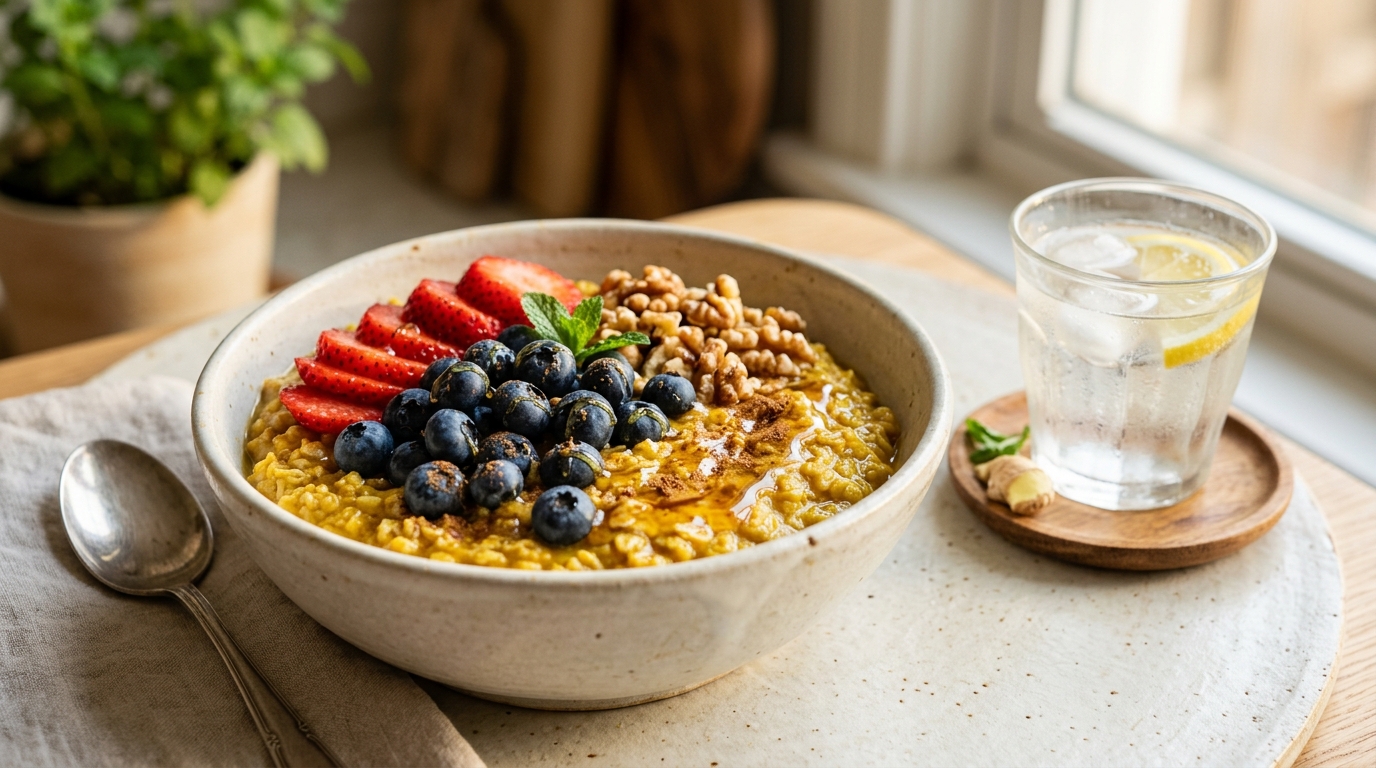
Turmeric Oats with Walnuts and Mango
Oats are one of the most evidence-backed whole grains for reducing inflammatory markers, specifically thanks to beta-glucan, a soluble fiber that’s been studied extensively for its effects on cholesterol and gut health. Add turmeric and you’ve got one of the most potent anti-inflammatory spice combinations in common cooking.
Make your oats as usual, then stir in half a teaspoon of turmeric and a pinch of black pepper while they’re still warm. (Black pepper is not optional here. It contains piperine, which increases curcumin absorption from turmeric by up to 2000%. Without it, most of the benefit passes straight through.) Top with walnuts, fresh or frozen mango, and a small drizzle of honey.
The mango adds natural sweetness. The walnuts add fat that makes the whole thing more filling and helps your body absorb the fat-soluble nutrients in the turmeric. It works.
Berry and Chia Smoothie Bowl
Blueberries, blackberries, and cherries sit at the top of almost every list of high-antioxidant foods. The anthocyanins that give them their colour are among the most well-studied polyphenols for reducing inflammatory cytokines. Research from NCBI confirms that food-derived polyphenols have direct intervention effects on the chronic inflammation pathways underlying most common diseases.
A smoothie bowl uses a thicker blend than a drinking smoothie, which means you eat it with a spoon, eat it more slowly, and actually feel like you’ve had a meal.
Blend frozen blueberries and blackberries with half a banana, a tablespoon of almond butter, and just enough milk to get it moving. Pour into a bowl. Top with chia seeds, a few fresh berries, and some sliced banana. The chia seeds add omega-3s and fiber. The whole thing takes about 5 minutes.
Smoked Salmon and Avocado on Rye
Salmon is probably the single best breakfast food for reducing inflammation. It’s one of the richest dietary sources of EPA and DHA, the omega-3 fatty acids with the strongest evidence base for reducing systemic inflammation. Avocado adds monounsaturated fat and vitamin E. Rye bread provides fiber that metabolises more slowly than white bread and causes far less blood sugar disruption.
Toast the rye, mash half an avocado onto it with lemon juice and salt, layer on the smoked salmon, and add capers and a few thin slices of red onion if you have them. The capers are worth it, they’re one of the more concentrated sources of quercetin, a flavonoid with solid anti-inflammatory research behind it.
Five minutes. Genuinely good. Keeps you full until well past noon.
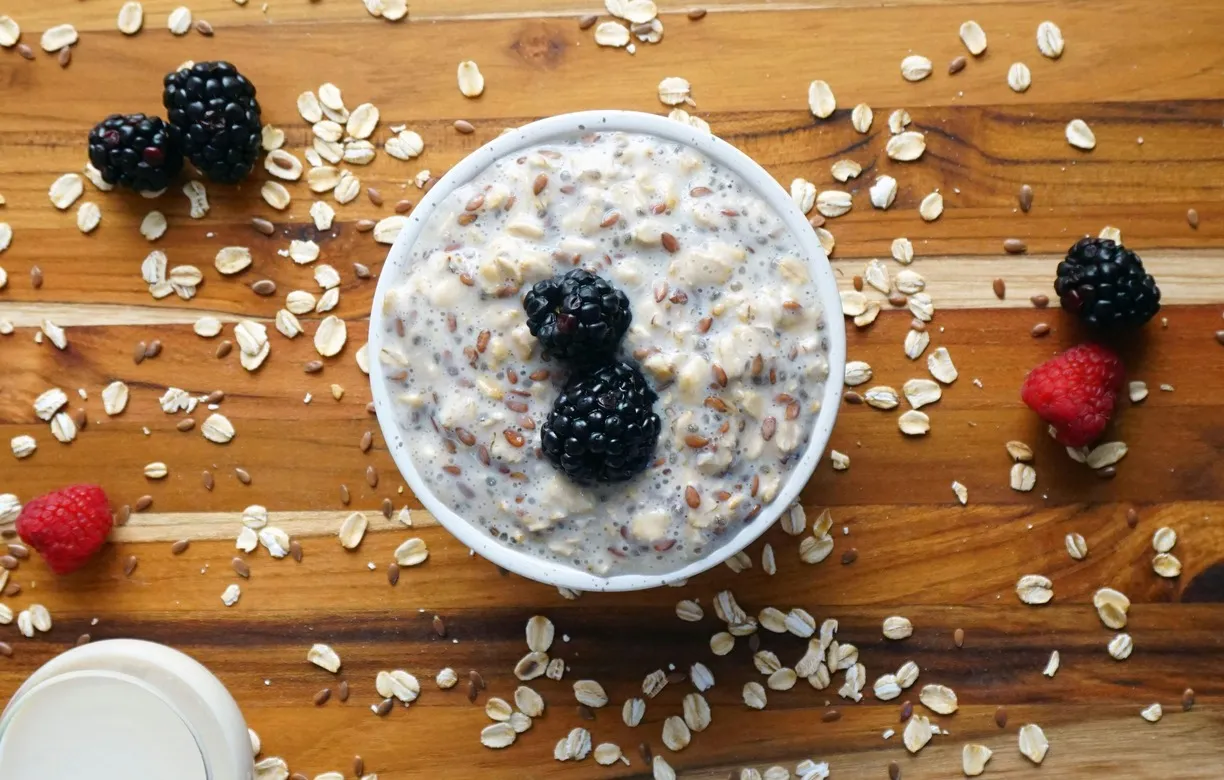
Overnight Oats with Walnuts, Flaxseed, and Berries
You’ve probably seen overnight oats. The reason they keep appearing in anti-inflammatory eating plans is simple: they concentrate several of the best ingredients into one bowl without requiring any effort in the morning.
Half a cup of rolled oats, half a cup of milk, a quarter cup of Greek yogurt, a tablespoon of ground flaxseed, a tablespoon of chia seeds. Stir, seal, refrigerate overnight. In the morning, top with walnuts and a handful of berries.
The flaxseed and chia seeds both add omega-3 fatty acids (ALA, the plant-based form). The walnuts add more. The berries add polyphenols. The oats and yogurt add fiber and probiotics. It’s hard to pack more anti-inflammatory ingredients into a single bowl, and the prep is two minutes the night before.
Scrambled Eggs with Spinach and Turmeric
Eggs are sometimes left off anti-inflammatory food lists because of outdated concerns about dietary cholesterol. The current scientific consensus, including guidance from the Harvard T.H. Chan School of Public Health, is that eggs, as part of a varied whole-food diet, are not associated with increased inflammation or cardiovascular risk for most people.
What they are is a good source of protein, choline, and vitamin D, and they pair naturally with some of the most anti-inflammatory vegetables.
Heat olive oil in a pan over low heat. Add a large handful of spinach and let it wilt. Whisk two eggs with a pinch of turmeric and some black pepper, pour over the spinach, and cook slowly, folding rather than stirring. The result is soft, flavourful, and takes about 8 minutes.
A Note on What Not to Do
Anti-inflammatory eating doesn’t mean a list of banned foods, daily detoxes, or supplements in place of actual meals. The research consistently shows that patterns matter more than individual foods. A breakfast of eggs and spinach doesn’t undo a life of poor eating, and one croissant doesn’t undo a year of eating well.
The point is to make breakfast a reliable daily contribution to how you want to feel. These five options do that. Start with the one that sounds best, make it a few times until it’s easy, then try another. That’s the whole strategy.
For the full picture on Mediterranean-style morning eating, Mediterranean breakfast recipes covers the broader approach these ideas sit within.
If you want to extend anti-inflammatory eating beyond breakfast, turmeric recipes for inflammation covers dinner-focused cooking with the most researched spices.