Eating well from Monday to Friday is mostly a logistics problem, not a willpower problem. When there’s good food already made and waiting in the fridge, you eat it. When there isn’t, you make whatever’s fastest, which is rarely what you’d choose if you’d planned ahead.
High-protein meal prep solves this. Two hours on Sunday, and you’ve got lunches and dinners sorted for most of the week. Here’s how to do it without eating the same thing every day.
Key Takeaways
– Distributing 25-30g of protein across each meal, rather than loading it all at dinner, supports better muscle maintenance and sustained energy, according to research from the Journal of Nutrition.
– The best meal prep proteins are the ones that reheat well and work across multiple meals: chicken thighs, salmon, lentils, chickpeas, eggs.
– Batch-cook proteins and grains separately, then combine them differently each day to avoid eating the same lunch four days in a row.
– Most prepped meals keep for 4 to 5 days refrigerated, or up to 3 months frozen.
Why Protein Specifically?
Of the three macronutrients, protein is the most satiating. It takes longer to digest than carbohydrates, it triggers fullness hormones more effectively, and it helps maintain muscle mass regardless of whether you’re training regularly or just trying to stay healthy as you age.
Most people eat enough protein overall, but they eat it unevenly. A light breakfast, a small lunch, and then a heavy dinner means most of that protein arrives in one hit at the end of the day. That’s not how the body uses it best. Research consistently shows that spreading protein across meals produces better outcomes for body composition and energy levels than concentrating it in one sitting.
Meal prep makes even distribution easy. When breakfast, lunch, and dinner all have a decent protein base ready to go, you stop relying on dinner to do all the nutritional heavy lifting.
The Core Proteins Worth Batch-Cooking
Not everything reheats well. Some proteins turn tough or dry when they’ve been in the fridge for a few days. These ones don’t.
Chicken thighs are more forgiving than chicken breast. They stay moist after reheating, they take to most seasonings, and they work in everything from grain bowls to wraps to soup. Season simply with olive oil, garlic, lemon, salt, and pepper. Roast at 200°C for 35 to 40 minutes. Done.
Salmon fillets hold up better than most fish after a day or two in the fridge. Baked or pan-seared, they work cold in salads or gently reheated. Two fillets take about 15 minutes to cook. They provide around 25g of protein each, plus omega-3 fatty acids that most diets are genuinely short on.
Hard-boiled eggs are fast, cheap, and portable. Six eggs take 10 minutes to hard-boil and keep for a week unpeeled. They’re not exciting on their own, but as an addition to a bowl, salad, or sandwich they add protein and substance without any extra prep.
Lentils and chickpeas are the most underused protein sources in most kitchens. Dried lentils need no soaking and cook in 20 minutes. Chickpeas, whether cooked from dry or from a can, are ready faster. Both can be seasoned simply or built into more substantial dishes. Both store well. Both are high in fiber as well as protein, which means they’re genuinely filling rather than just technically nutritious.
The Grains and Vegetables to Cook Alongside
Protein is only half the equation. You need something to put it on or with.
Quinoa and brown rice are the most practical batch grains. Cook a large pot of either on Sunday and they’ll serve as the base for multiple different meals across the week. Quinoa contains more protein than most grains (around 8g per cooked cup), which is a bonus rather than the point, the point is that it keeps for 5 days and goes with almost anything.
Roasted vegetables transform in the oven in a way they don’t on the stovetop. Sweet potato, courgette, red pepper, broccoli, red onion: toss with olive oil and salt, roast at 200°C for 25 to 30 minutes, and you’ve got vegetables that are genuinely good to eat, not just present on the plate. They reheat well or work cold in salads.
A Practical Sunday Prep Session
You don’t need to cook everything at once. A realistic session looks like this.
Start with whatever takes longest. Chicken thighs in the oven, brown rice on the hob, roasted vegetables on a second oven tray. While those are running, hard-boil some eggs. Rinse and season the chickpeas. Twenty minutes in, add the salmon to the oven if you’re doing fish this week. By the time the chicken comes out, everything else is nearly ready.
Total active time: roughly 30 minutes. Total elapsed time: about an hour and a half.
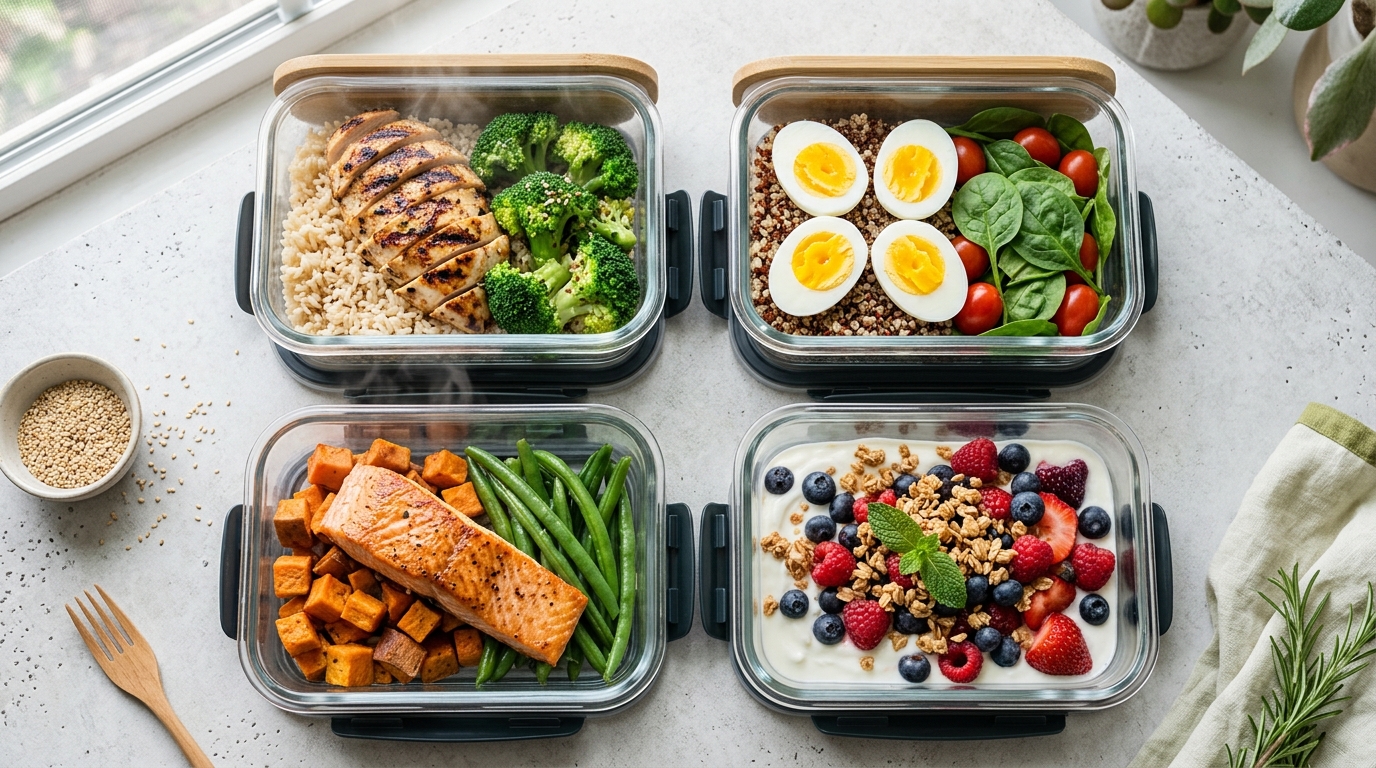
What you end up with is a collection of components. Protein sources, a grain, roasted vegetables. From these you can make grain bowls, wraps, salads, or simple plates with whichever combination appeals on a given day. The variety comes from how you combine and season things, not from cooking entirely different meals each time.
Seasoning is the Difference Between Eating Well and Eating Sadly
Bland meal prep is the reason people give up on meal prep. If everything tastes like unseasoned virtue, you’ll be ordering takeaway by Wednesday.
A few reliable approaches: Moroccan spicing (cumin, coriander, cinnamon, paprika) works well on chicken and chickpeas. Lemon and herb (lemon zest, parsley, garlic, olive oil) lifts salmon and lentils. A good tahini dressing (tahini, lemon, garlic, water) turns any grain bowl into something you’d actually want to eat.
The NHS recommends varying your protein sources across the week rather than eating the same thing daily. That’s as much about keeping it interesting as it is about nutritional variety. If you look forward to what’s in the fridge, the habit sticks.
Storage: What Goes Where and for How Long
Cooked chicken, salmon, and eggs keep for 4 to 5 days in the fridge in airtight containers. Lentils and chickpeas the same. Cooked grains last 5 days. Roasted vegetables, 4 days, they do soften a bit over time, but they’re still perfectly edible.
If you’re prepping for a full week, freeze half of what you’ve made on Sunday and pull it out mid-week. This keeps things fresher and prevents the slight staleness that affects anything stored for more than 4 or 5 days.
Label containers with the date if you’re the kind of person who opens the fridge and immediately forgets when you made something. Everyone is that person.
The Simple Version
If two hours on Sunday sounds like too much, start smaller. Pick one protein and one grain. Cook them in quantity. That’s the foundation. Everything else: the vegetables, the sauces, the variety, comes later once the habit is established.
The goal isn’t a perfectly optimised meal prep session. It’s having something good to eat on Tuesday at 1pm when you haven’t had time to think about food. That’s the whole point.
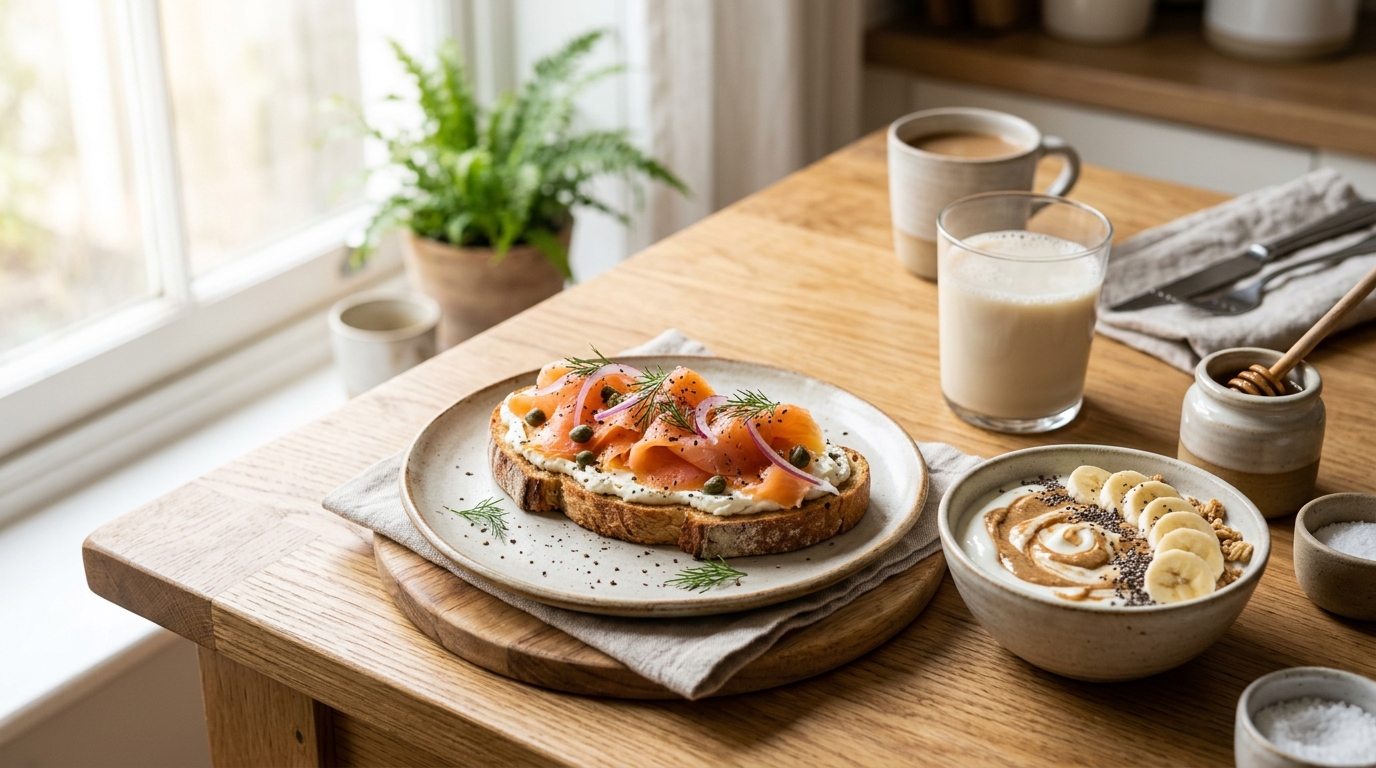
For mornings specifically, high-protein breakfasts without eggs covers options that work well as part of a prep routine.
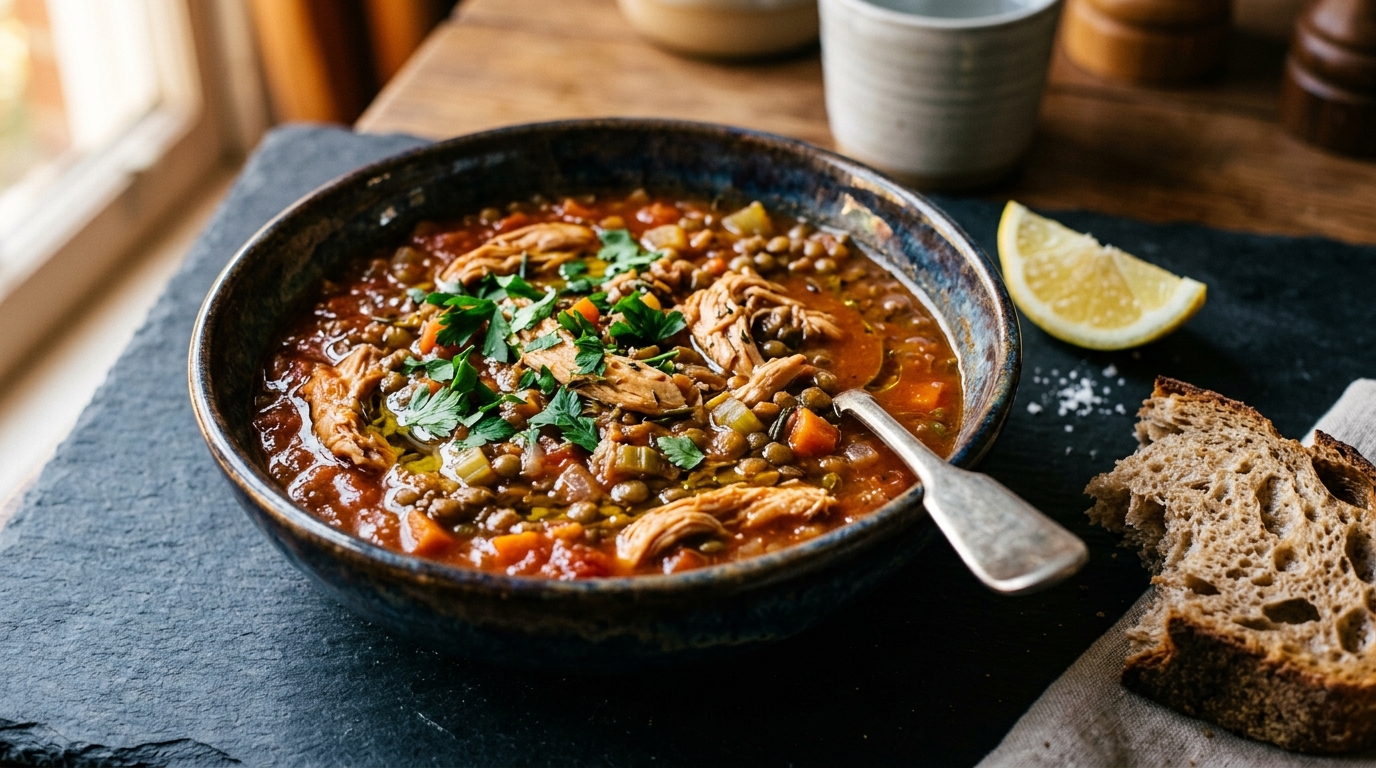
Chicken and lentil recipes are particularly well-suited to batch cooking: they reheat cleanly and improve overnight.
Lentil recipes deserve their own section in any prep plan. The protein-to-cost ratio is hard to beat.
For prep that focuses on fish, high-protein fish recipes covers the options that hold up best through the week.
If you’re starting with breakfast rather than full-day prep, Mediterranean breakfast recipes gives you a reliable morning foundation to build from.