Cod gets overlooked. It doesn’t have the cachet of salmon or the flavour of mackerel, and people who haven’t cooked it well assume it’s bland and unremarkable. Cook it properly and it’s one of the best white fish you can eat: clean, mild, with a firm flake that holds its structure and pairs beautifully with almost any vegetable or sauce.
Baked cod with vegetables is also one of the more practical weeknight dinners in existence. Everything goes into one dish. It takes about 10 minutes to prepare and 20 minutes in the oven. The washing up is minimal.
Key Takeaways
– Cod is one of the leanest dietary proteins available at roughly 20g of protein per 100g with almost no fat, making it ideal for high-protein, low-calorie meals.
– Baking preserves more of the fish’s omega-3 content than frying at high heat.
– The key to good baked cod is not overcooking it. The fish is done when it flakes easily with a fork, around 12 to 15 minutes at 200°C for a standard fillet.
– The vegetables in the tray absorb the cooking juices and become the sauce.
The Classic: Mediterranean Baked Cod
This is the version worth learning first. Everything in the tray contributes flavour, and the result is something that tastes significantly more composed than the effort involved.
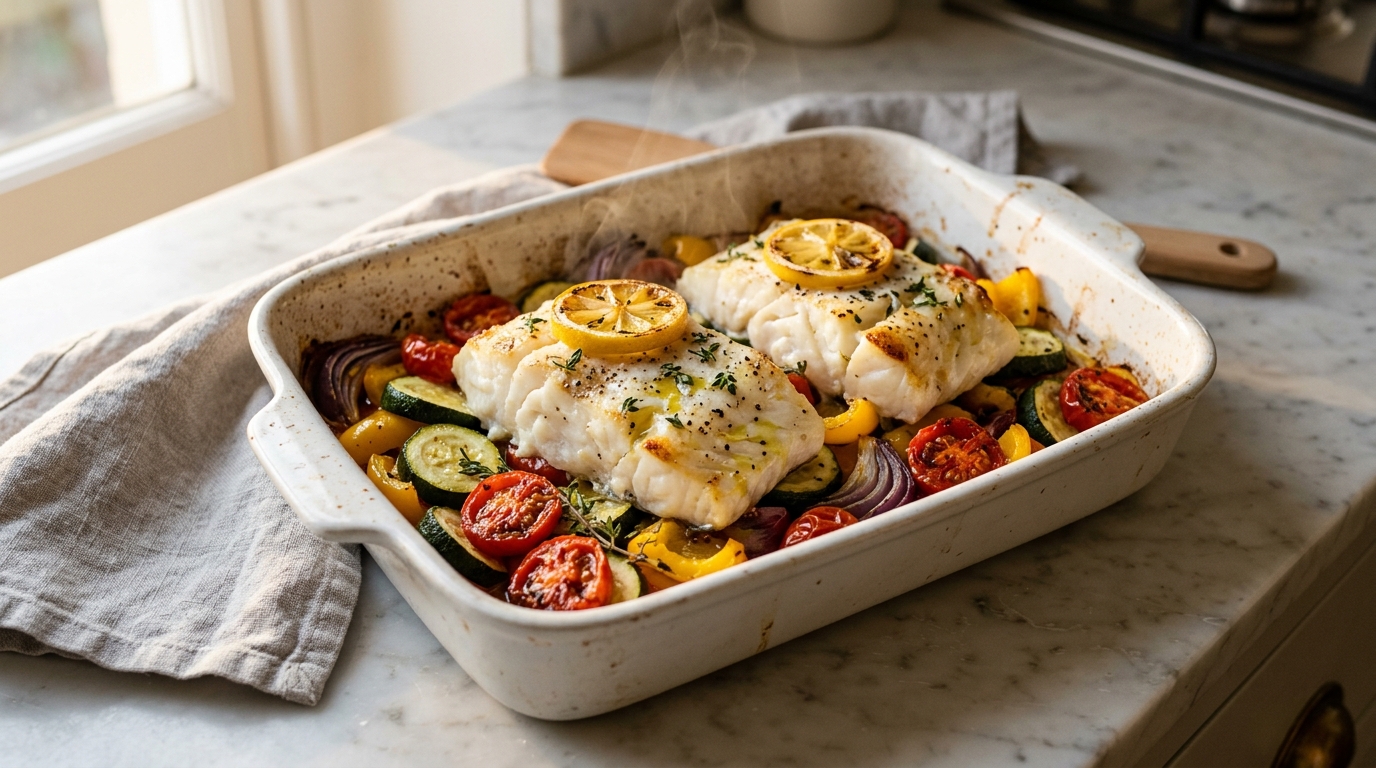
Serves 2: 2 cod fillets, 1 tin of cherry tomatoes (or 300g fresh), 1 red pepper (sliced), 1 red onion (sliced into wedges), 3 garlic cloves (crushed), a handful of olives, 2 tbsp olive oil, 1 tsp dried oregano, salt, pepper, fresh parsley and lemon to finish.
Preheat the oven to 200°C. Toss the tomatoes, pepper, onion, garlic, and olives in the olive oil, oregano, salt, and pepper. Spread in a roasting dish and roast for 15 minutes. Place the cod fillets on top of the vegetables, season, drizzle with a little more olive oil, and return to the oven for 12 to 15 minutes until the fish flakes easily.
Scatter fresh parsley over everything. Squeeze lemon over the fish. That’s it.
The vegetables have cooked down into something closer to a sauce by the time the fish is done. The olives have released their oil into everything. The result is a genuinely complete dinner with no additional sauce or side dishes required, though good bread for mopping up is strongly encouraged.
Baked Cod with Lemon, Garlic, and Asparagus
A lighter, cleaner version that works particularly well in spring when asparagus is in season.
Lay a bunch of asparagus in a roasting dish with a drizzle of olive oil, salt, and pepper. Roast at 200°C for 10 minutes. Season the cod fillets generously with salt, pepper, lemon zest, and a little garlic powder. Place on top of the asparagus. Add thin slices of lemon over the fish. Return to the oven for 12 minutes.
Finish with a drizzle of good olive oil and some capers if you have them. The capers add a briny, sharp note that cuts through the richness of the fish and the sweetness of the roasted asparagus.
The NHS Eatwell Guide recommends two portions of fish per week, at least one of which should be oily. Cod is not oily, but it’s an excellent lean protein in its own right, and serving it alongside vegetables and good olive oil makes it a nutritionally strong meal regardless.
Baked Cod with Chorizo and Chickpeas
This is the boldest version on this list. Chorizo contains enough fat and paprika oil to turn even the most restrained tray bake into something with real depth and character.
Slice a small cooking chorizo into coins. In a roasting dish, combine 1 tin of drained chickpeas, the chorizo, 1 tin of tomatoes, 1 red pepper (diced), and 2 garlic cloves. Mix well and roast at 200°C for 15 to 20 minutes, stirring once, until the chorizo has released its oils and the chickpeas are slightly crisp.
Place the cod fillets on top, season, and return to the oven for 12 minutes. Finish with fresh parsley and a squeeze of lemon.
This is a fuller dinner than the lighter versions above, the chickpeas and chorizo add significant substance. It also reheats well, which the purely vegetable versions don’t always.
Getting the Cod Right
The single most common mistake with baked cod is overcooking it. An overcooked fillet is dry, tasteless, and the reason people conclude they don’t like white fish. A properly cooked fillet is moist, with large clean flakes and a flavour that’s subtle but genuinely satisfying.
Test it at 12 minutes. The fish is done when a fork pressed gently at the thickest part meets no resistance and the flesh separates into clean flakes. At that point, take it out. Even 3 or 4 extra minutes will change the texture significantly.
Buy cod that smells of the sea, not of fish. The difference between fresh and older fish is significant here, more so than with most proteins.
For a broader look at fish as a high-protein ingredient, high-protein fish recipes covers the full range from salmon to sardines and explains which options give you the most per serving.